Shortcuts
  • Common Ground
  • Summer Conference
  • Residential Fellowship
  • Vocational Programme
  • Sign Up
  • Instagram
  • Facebook
  • Lead Programmes
    • Summer Conference
    • Residential Fellowship
    • Vocational Programme
    • Evening School
  • Vocational Centres
    • Centre for the Arts
    • Centre for Business & Leadership
  • Courses & Events
    • Conversation Evenings
    • Short Courses
  • Resources
    • Store
    • Common Ground Magazine
    • Venn Presents
  • Who We Are
    • About
    • Our Story
    • Our People
  • Donate
  • Contact
Venn Foundation
58 Hillsborough Road
Hillsborough, Auckland 1042
Email: mail@venn.org.nz Phone: +6499294988
PO Box 163138
Lynfield, Auckland 1443
  • Link copied!

Field Notes: Keri-Ann Hokianga

By Jannah Dennison >> 26 min read
Interviews

Ki te taha o toku papa,
Ko Rongowhakātā me Te-Aitanga-ā-Māhaki me Ngāti Kahungunu ōku iwi.

Ki te taha o tōku māmā,
Ko Ngāti Kahu me Ngaitakoto me Te Aupouri ōku iwi.

Ko Hokianga te ingoa whānau, Ko Keri-Ann Hokianga ahau.

Rev. Keri-Ann Hokianga is a Māori evangelist and priest based in Manukau. She talks here with Jannah about her early years, about a life-changing encounter with God, and about the unfolding of her work and calling.


Tell me about your immediate family, and your early years.

Ko wai ahau? Ki te taha o tōku pāpā nō Manutuke Te Tairāwhiti ahau. Ko Hokianga te ingoa whānau. Ki te taha o tōku māmā nō Pāmapūria, Kaitaia ahau. Ko Keri-Ann Hokianga tōku ingoa. Ko au te kaikauwhau o Te Rongopai ki te Tai Tokerau.

So, on my father’s side, I hail from one of my centres of the universe, Manutuke in Gisborne. We are the Hokianga family. On my mother’s side, I hail from the far North from a place called Pāmapūria in Kaitaia. My name is Keri-Ann Hokianga, and I am the second eldest of five. I am a Māori Evangelist, and I currently reside in Māngere Bridge.

My siblings and I are army kids. Our father was posted to Papakura back in the 90’s, and I was born in Waiouru. In 1996 my father decided to get out of the army, and he took us over to Sydney, Australia. I went to primary and intermediate school there, and also did my first year of high school. We spent eight years in Australia and then came back to New Zealand.


What is your current living arrangement?

At the moment I live with my three siblings and my brother-in-law. We’ve lived together for over seven years. And we get on like a house on fire. We’ve learned to live with each other, and give each other space. But I think that’s normal for most Māori families, to live in community settings. Before we went to Australia, my parents and siblings and I were living with 21 others. It was normal to come home to all the cousins and aunties and uncles. So yeah. Nothing foreign to us, living like this.


Did you grow up in a Christian family? What was faith like for you in your younger years?

We grew up in a very staunch Anglican family. I am currently an ordained priest in Te Hāhi Mihinare, the Māori Anglican Church, and I’m a fourth-generation ordained priest in my family on my mother’s side. My great-grandfather is the late Reverend Hone Karaka, who served in the northern Wairoa district. His son, my mother’s father, is the late Archdeacon Bert Karaka, who served here in Manukau, Auckland, and he also served throughout the Hauraki-Tāmaki area. He was actually a church planter, my grandfather, and I’m learning more about his ministry in my role currently today. My mother is the Archdeacon of Kaitaia Muriwhenua up in the far North, and my father is also a priest! So yeah, we grew up in a very staunch Anglican family.

For me, my journey in learning about the Māori Anglican Church began through my grandfather. I remember church for me starting in his garage in Māngere, at his home. For me, it looked like having Sunday School with all of my cousins—40-plus first cousins. We’re close with our second cousins too, and there’s 30 to 40 of them. We grew up going to Grandpa and Nan’s house on Jordan Road, having Sunday School, having morning prayer at 7 a.m., and then evening prayer at 7 p.m.

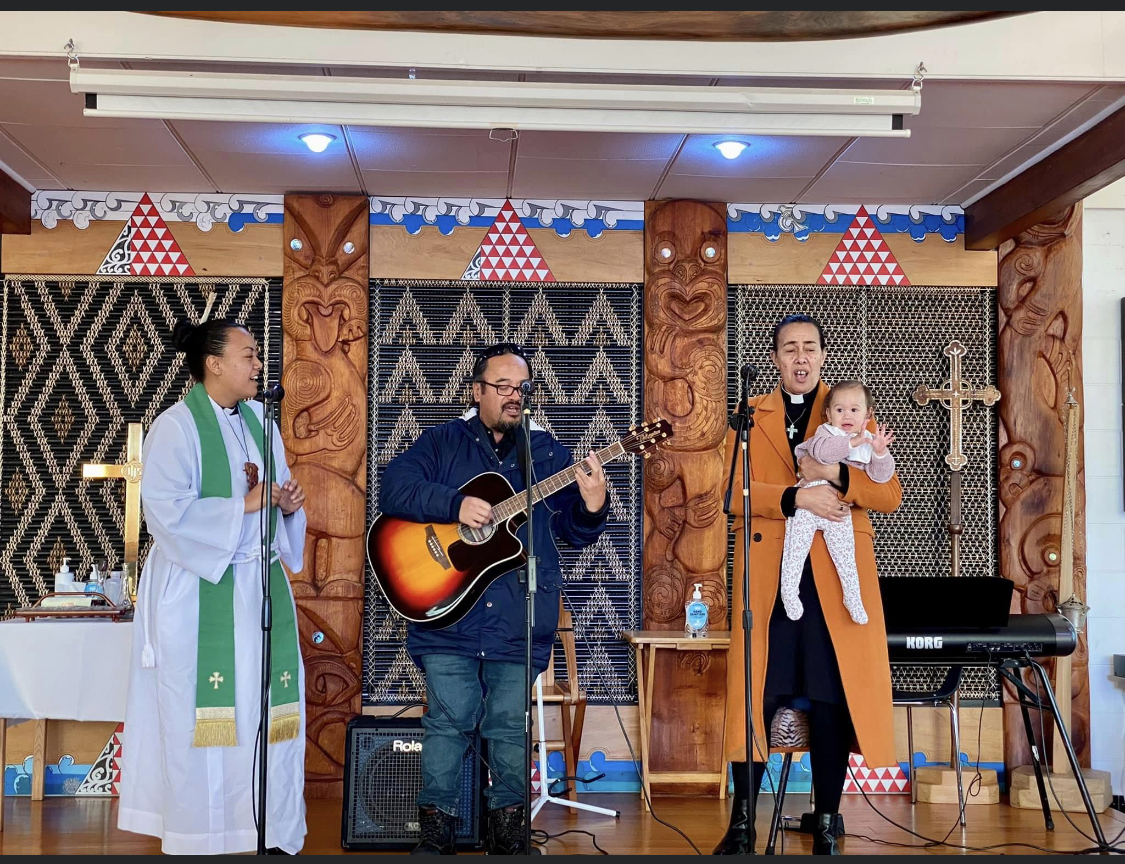
This was before we went to Australia—I remember as far back as five being “voluntold” by my mother and all of her sisters to sing “Father Abraham had many sons,” and crying. And then being part of the life of the church that I currently serve as a priest in, which is Te Karaiti Te Pou Herenga waka at Māngere, and being involved in skits and plays with my cousins at the age of five. Cool eh!

Ker-Ann Hokianga 1

That’s a pretty amazing legacy of faith, isn’t it? Did you have a period where you resisted that legacy, and pushed back?

Absolutely, yes. And that happened when I was around 19. It came in the form of having a disconnection between my parents and I—and my siblings, who I now live with. We all have a beautiful relationship now. But at the time I was estranged from my family because of my choices. I remember being told by my family that this is not God’s way, the way you’re choosing to live as a 19-year-old and the choices that you’re making—that’s not what we’ve taught you. Those aren’t part of the biblical foundations and values that you’ve always known for 19 years. I remember struggling with it, and saying to God—well, not actually saying to him, I was yelling at God—saying Why? Why should I follow you? You seem to be this barrier in front of me that wants me to be miserable. I can’t see the goodness in following you. And if you want me to follow you just because my great-grandfather did, and my grandfather, and my parents, I’m not going to do it. I’ve heard about it, I go to church, I listened to the preacher, I go to youth group with my family and I’ve been part of skits and plays that are all about you. But I don’t know you. And I’m not going to choose to follow you just because of them.

I was probably also struggling with living in kotahitanga—unity—with everyone; everybody knows your business. And I’m like, I just want independence. I want to get away. I want to live my own life. I remember asking God “What have you even done for me?” And that’s when I had my encounter with the Lord.


Tell me about your encounter!

I’m sure by now you’ve heard that I like to be independent and make my choices. That wasn’t just in my faith; it also came through in how I managed to get into secure work. I wouldn’t wait for anything to be handed to me on a silver platter. I’m a go-getter. I realise it’s not going to come to me—I’ve got to go and get it. So, after yelling at God, saying Prove yourself to me, show me… I guess my mind was imagining that the roof that I was looking at would open, and then I’d see pictures of heaven, and angels flying and then I’d be like, ah yeah, now I know it’s real. Now I know. Of course, things didn’t happen that way.

So, my parents were away for a few hours, and my role was to take care of my three younger siblings. I was actually quite strict on the younger siblings, like: “Go to bed”; and that gave me time to basically yell at God. While they were sleeping, I remember lying on my bed, and behind my bed wasn’t a headboard. It was a wall. So, nobody came in, no door, no window. And nothing had happened—I had no bright light coming at me, no audible sound in my ears or anything like that. And I went to sleep. I remember before I slept, saying to God: Well, I guess you’ve proved me right. You don’t exist.

I remember closing my eyes, and then feeling the sensation of oil pouring over my head. And I opened my eyes. So, I knew it wasn’t a dream because I saw my siblings in front of me. And I turned because it felt like someone was standing behind me pouring this oil over me. It wasn’t hot. It wasn’t cold. I can’t even describe it. Something I had never ever felt. I look behind me and nobody’s there. But I still felt the sensation of oil. It ran down my head through to my shoulders. And then I remember it hitting my heart. The oil when it hit my heart, it felt like the oil was filling in holes in my heart—I actually felt the holes being filled by this oil.

And I cried, Sister Jannah, I cried. Because I have never felt so held with love like that before. I tried finding relationships, physically intimate relationships, and using substances to fill the void; I ran away from my parents, who tried to love me and I couldn’t see it. Oil that hit my heart filled those holes. I remember feeling, Oh my gosh, I’ve never felt this love before. It felt like someone was holding my heart.

At the time of this, my Dad was learning how to become a layperson in the Māori Anglican Church. He would follow my grandfather, who was the Archdeacon in the Anglican Church, and part of his role was to set up the altar. One of his tasks was also to help with some full immersion baptisms. A month before my encounter with the Lord, my father had asked me, as his troubled teenage daughter, would I consider being baptised, fully immersed? I was like, “No. What? No, I’m not doing that. I don’t understand what it is.”

Anyway, I have this encounter at night. At the time, my parents and I were like ships sailing past each other in the night and in the daytime. I just had no relationship with my Mum and Dad. So, I wake up, and my eyes are all puffy from crying. I see my Dad walking up the hallway, and I run to my Dad—I’m a lot taller than my father—and he braces himself, and he had the biggest smile on his dial, like, there’s something different about my girl. And I jumped into his arms, and he held me. And I said “Dad!” And he said I love you. I love you. I said to him, Dad, is it too late for me to be baptised? Is it too late for me? And he cried and he cried and he cried. And he says, No, it’s not too late. So, he invited me to be baptised. And I was baptised that same week.

Wow!

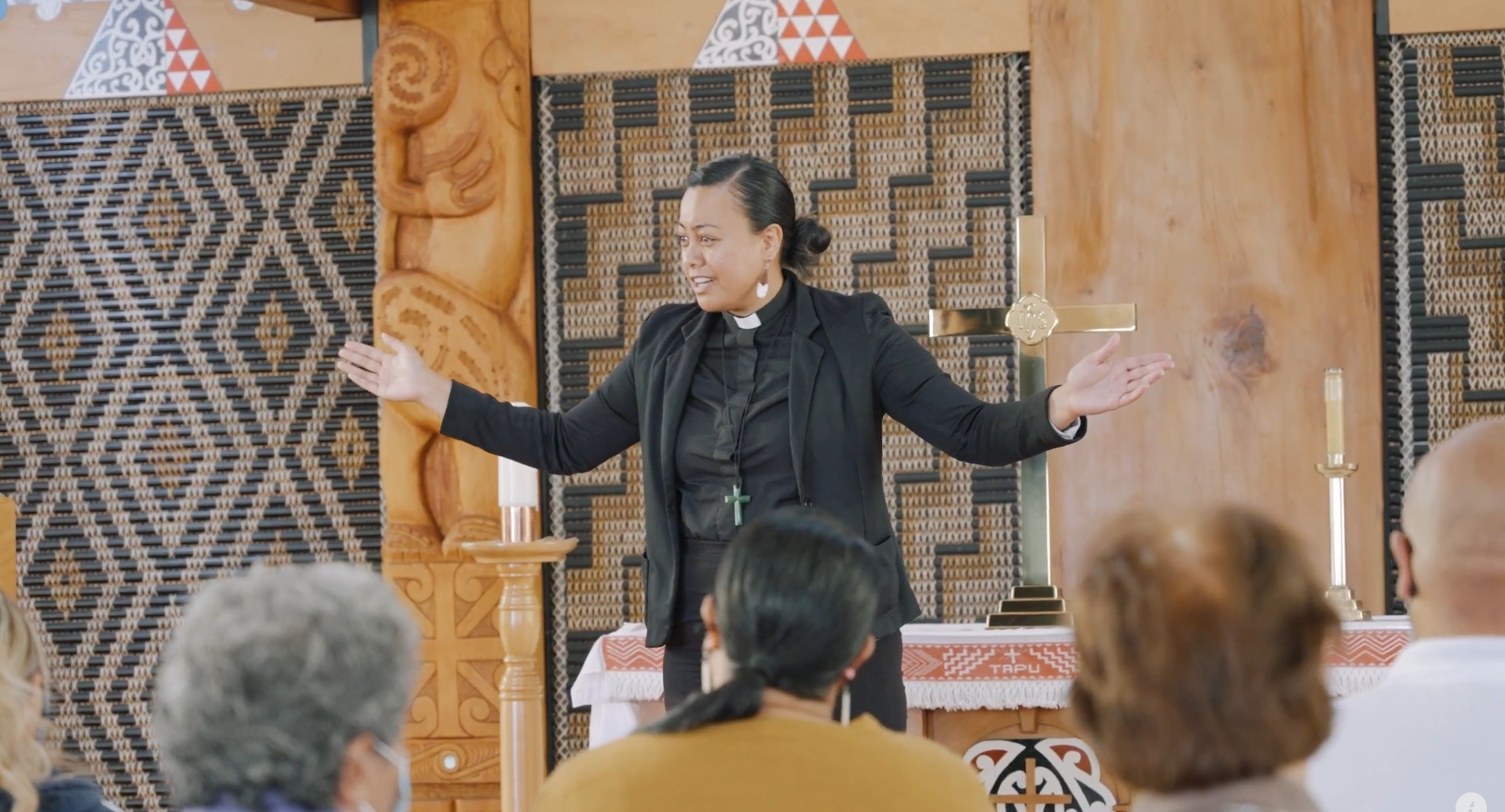
Keri-Ann Hokianga 2

Tell me about what happened after you finished school.

Well, for any young person that is currently at school: stay in school! Do not be like me and drop out at Sixth Form [Year 12]. School wasn’t easy for me. I found it hard. So, after leaving I went through multiple different jobs, from waitressing to working with a sea freight company. In 2008 I joined a courier company called FedEx. I ended up spending 11 years with them. My grandfather had encouraged me to go and work for FedEx, because he had used their services. And he said, they’ll look after you. They’re a global corporation. They will encourage you and invest in you to climb the corporate ladder. And he was bang on. I spent most of my time on customer services. Any opportunity to progress further, I’d take the interview—I was nervous, but I did it. I became a team leader in customer services. Then I was headhunted by the sales manager to come and join sales, and this is where—and hindsight kind of kicks in—I believe God was shaping me and equipping me for evangelism.

I was told by other whānau members who have been in sales that you’re either one of 200 sales reps, you’re an account rep taking care of existing business for the company, or you are a hunter for new business. At FedEx, the requirement for me was that I would be both. So here I am now as a priest in the Anglican Church, as well as evangelising to go outside. Isn’t God smart?!


Tell me about the transition from FedEx to ministry.

I had five years in sales, and I absolutely loved it. They trained me how to break down barriers before speaking with customers, and how to build relationship. I bleed purple and orange blood. Those are the colours of FedEx. I say that FedEx are Anglican, because they have order. So, there were some really beautiful things about that whole time; and travel to China and Australia with it. I was really, really blessed in that work. And I loved it.

My manager at the time, an Australian manager, he said: Come and join my team. And I said why? I have no qualifications. And I was the only Māori. I said, I don’t know how to speak with CEOs and CFOs of companies: I’d let you down. And he said: No, I can teach you all of that. We can teach you all of that. But what we can’t teach someone is how to have people skills, and you have that naturally.

This would call me to move to Sydney, Australia, again. It would allow me to climb the corporate ladder more. I thought that was deeply important as a female in the corporate world, as well as being a Māori with no qualifications, to retell the narrative for some of my people: to say, you can do this, look at what the possibilities are. Also, this offer of a promotion with FedEx meant that I could financially get myself debt free, perhaps buy a home in New Zealand for my family and be the first out of my siblings and my parents to get us on the property ladder.

But that same day that I had the invitation for a promotion…. Yeah. Same day! I’m like, God, you set me up, man!…. I get a call from Lyndon Drake. And he says to me, Keri-Ann, I’m aware of where you currently work, and I understand how well they’ve taken care of you and your whānau. But Lyndon proposed two roles that would be based here in Auckland. These would be in partnership with our local church, our local Pīhopatanga and Bishop Kito, and the New Zealand Church Missionary Society [NZCMS].

Lyndon said: I don’t know if you know the gospel story and its arrival into Aotearoa and the partnership that the Māori Anglican church have with the CMS. But there were once Māori Evangelists. And there was a beautiful flourishing of Māori coming to faith in Jesus Christ as a result of having Māori Evangelists in the 1800s. So, in the 19th Century in Aotearoa, we had a lot of Māori converts to Christianity—Karaitiana. And Lyndon said: I would like us to revisit those roles for Māori to evangelise to Māori the good news of Jesus Christ.

How have I come about this? says Lyndon. He had a look at the steps on the census forms and could see that a lot of Māori within Manukau alone claim to be either non-religious, or part of the Māori Anglican church. And he said: Oh, those statistics don’t match what we see physically in our churches, because they’re actually quite empty. So, we need to know where our people are going, and if they’re being looked after. Do they know the goodness of Jesus Christ the way that you and I do, Keri-Ann?

So I sat there, like: Yeah, and, what does that have to do with me, Lyndon? And he said, I’ve been praying and praying about who can fill these two roles. I’ve managed to get funding for two of these roles. One has been taken by the Reverend Howard Karaka. The other role: I believe the Lord has placed your name on that role, Keri-Ann. And I can promise you more work, less money, and no thanks! And I laughed, and—oh, actually, I didn’t laugh. I thought, Yeah, you’d probably be a terrible sales rep, Lyndon. But what he did promise me was how God would honour me for all eternity as I seek to be obedient to his call upon my life as an evangelist.


What happened next?

So, at that time in my life, all I would do in terms of volunteering my time for my local church was to go on Sunday with my siblings. I’d play the guitar, and lead the hymns. And I was quite bored—as a young person, I thought, come on, there has to be more than this. Our church was quite old. I was one of the youngest ones, and I was in my 20’s. But at that time, that’s as far as I went in terms of volunteering my time for the church every Sunday.

After Lyndon’s invitation, I struggled for a whole year, in all honesty, to let go of the finances, and also for those very reasons I shared with you as to why the promotion would be good for my family. But throughout that year, Sister Jannah, people at FedEx, who were not only Māori—they were Pākehā, Indian, Asian, some non-religious, some religious, some Mormon, some Catholic, some Baptist—when they heard about the choice I had to make between the two options I had, they would weep. They’d come and see me and say: You’d be fantastic as a sales rep, Keri-Ann. But we just feel deep in our heart that your vocation is with the church. And I’m like, what the heck is a vocation? I had to Google it.

Google said, “your destiny; you’re born for this”. And this was alongside praying to God, wrestling with him. Why now? This is a sacrifice to have to make—I will not get this opportunity again, in all honesty, with a corporate company, Lord. Is this of you? If so, give me the courage to let go and trust you. My family never pushed me to make a decision I didn’t want to make, but they said, we stand by you and support you with whatever decision. You choose, Keri-Ann. And here I am, three years later, and I don’t want for anything. We’re on the pathway to homeownership. God has been faithful in taking care of not only me, but my whānau.
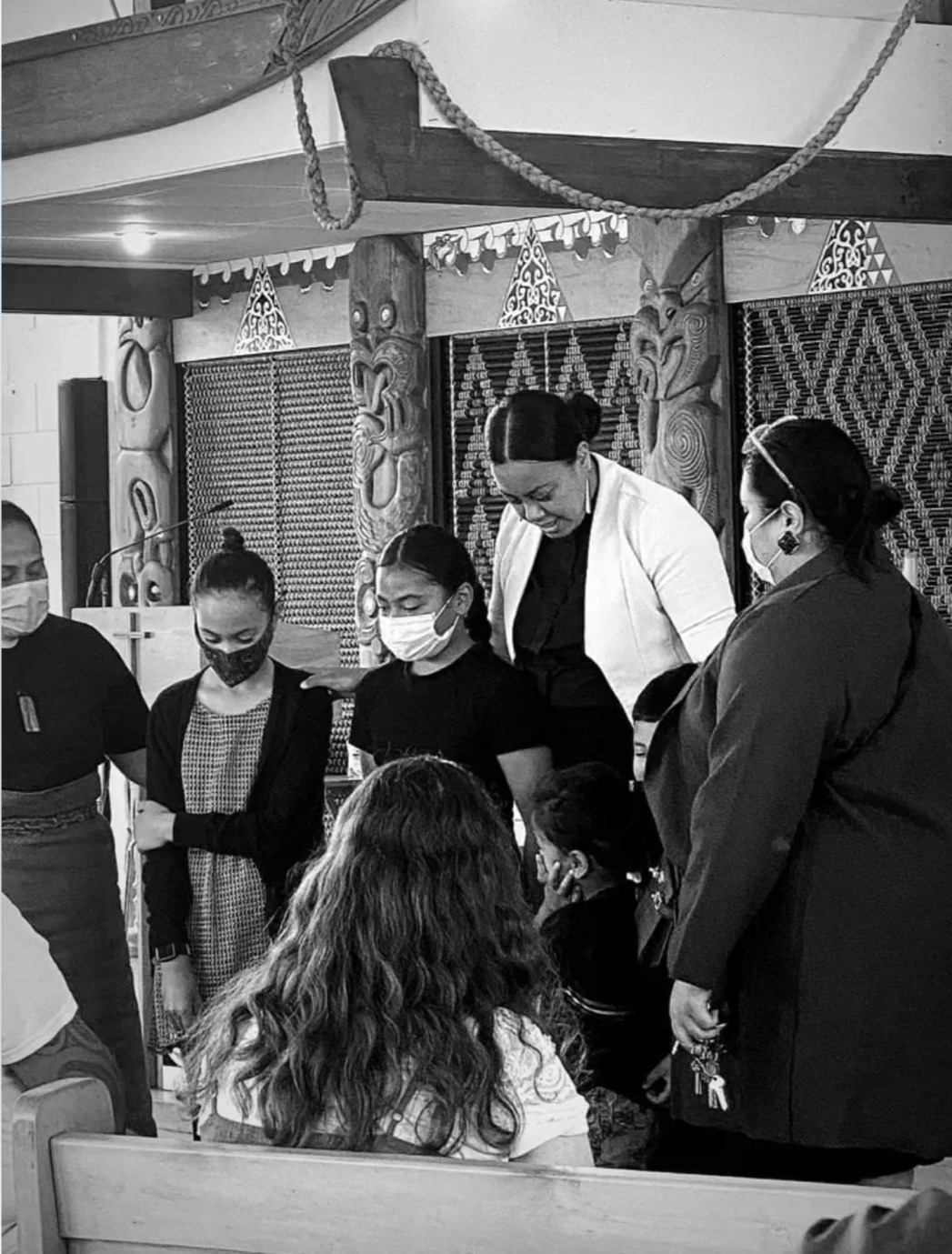
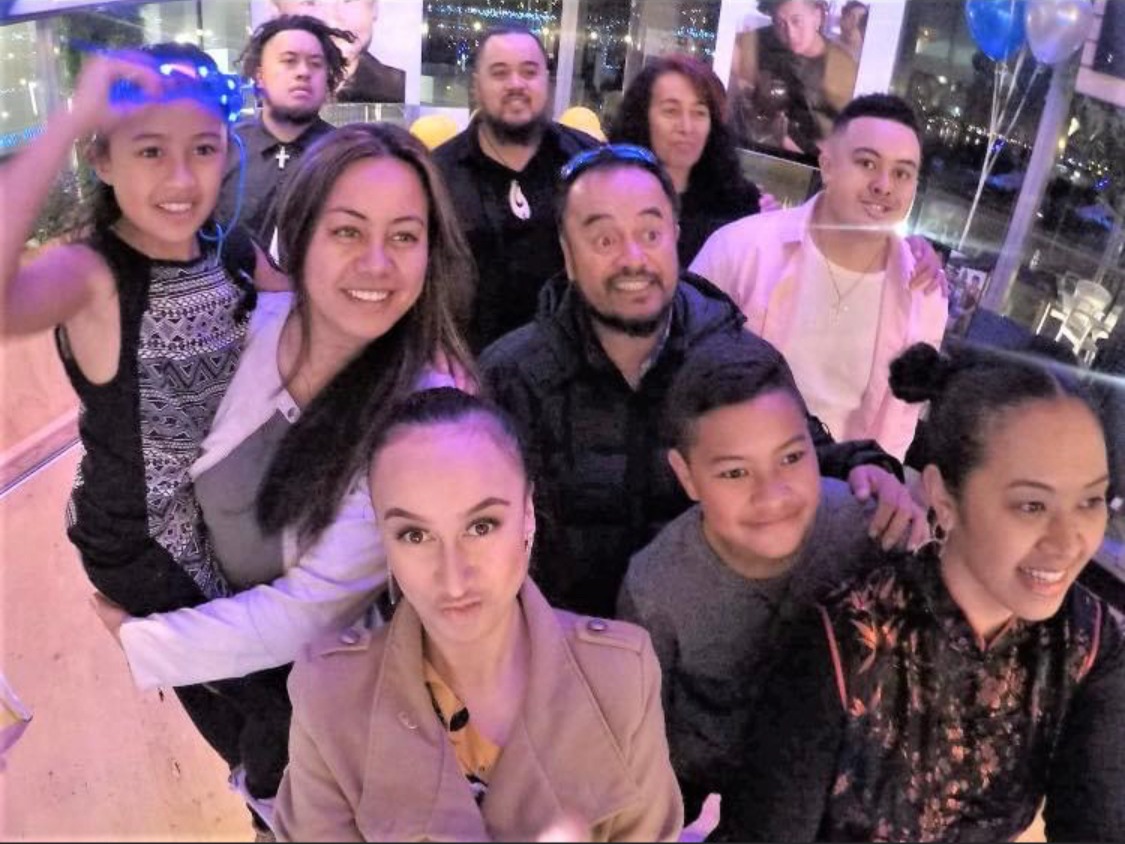
Keri-Ann Hokianga 4

In doing what you’re doing, you have to love people! But I guess you also need to love the church, or at least grow into loving the church! What was it like for you, moving from frustration to a better place with the church?

Loving the church! Yes. So, I’ve been called to all people, but my role is actually to focus on Māori in particular. And it’s been in the form of: well, where are Māori going, if not to the church? Where do Māori gather? The most obvious place has been the marae, and the Māori schools. Our Māori people call upon Māori Anglican ministers, especially to take funerals. That’s where I’ve encountered preaching the Word of God to my people. And there was a response from my people where they wanted to know more—they were interested. There was a movement happening where I would actually ask if anyone would like to know Christ, and to pray with me to receive him into their hearts for the first time, or a renewal. There were people coming forward and wanting to do that. Māori people.

Then from there, I had said: Well, Lord, I am an evangelist, but we need a place to bring people to in order to continue to nurture and disciple them, to grow their faith, teach them your Word; and for them to be around your people. And that’s your church! That’s your church. So, I remember coming back to Lyndon, and saying: We need to create a space where our people feel that they belong, where they feel that they are home. Because in all honesty, when it comes to the church, there are different reasons for Māori not attending. And they are not the easiest reasons for us to unpack in one sitting. We actually need to be strategic in the spaces we create, for Māori in particular, when it comes to God’s church; but the Lord has told me, Lyndon, that his church is important. We need to work in creating that space.

And we have! A church has been planted. So now I can’t use those words that I said to you earlier about coming on a Sunday and playing the hymns and being bored and saying: Oh my gosh, there has to be more to life than this. This new church plant is called Koringarau—in English, that comes from the book of Peter. It speaks about the “rustling of the leaves”, And that’s what the Spirit of God does.

The name was given to us by the Reverend Katene Eruera. We were gifted that, and we love seeing the Spirit of God actually moving in his church that way. Some of those people from the marae have connected with Koringarau. So that’s what we’ve seen: the fruits of evangelism, but the importance of having his church there ready to receive his people.

Part of the normal shape of the week for me now involves broadcasting the gospel, in partnership with one of the nine marae in Māngere alone. That’s just on a radio that reaches 5000 Māori listeners. Each week I work with a team to come up with a 30-minute proclamation of the Word through song using te reo Māori, preaching, and… yeah. We’re blessed.


I’d love to hear something of joy for you in your work, and something that brings you grief.

I’ll start with the grief, eh. Let’s get the grief out of here! My grief—one of them, one of the pōuri things in my line of work, is that there has been an incorrect narrative of the gospel told to Māori—where colonisation, unfortunately, has taken its toll on some of the perspective from Māori toward the church. Towards the buildings of the church, as well as the people of the church, and of the Word of God as well.

But one of the joys in response to that grief, that barrier that saddens my heart, is that I can use my voice as tangata whenua. Firstly, as a child of God, who has encountered the love of Christ, I can retell that narrative. And I’m seeing those walls being broken down. They may not be coming to church, I’m not gonna lie. Māori don’t immediately come to church when they do hear me preach the Word of God. But there is a breaking of the walls in terms of some of the perspectives that Māori have. I don’t speak for all Māori, but some that I encounter. It’s a journey, and I’m joyful to see that God’s Spirit is already among the Māori communities.

I love to say that my role as an evangelist is not to go and take God to anybody. Someone said to me, I’m sure Jesus says, “Come follow me”, not “Go before me—go out ahead of me Keri-Ann, with all your skills and talents!” No, Jesus says, Come, follow me. Come and see, and then go and tell. That’s what I take as my role: being someone to fan into flames something in the hearts of people, to know the love of God; to know the love of God. That’s how I see my role. So that’s a huge joy. I love that. And I see it! I see it. Yeah. Praise you God!

Keri-Ann Hokianga 5

So, wintering well: in a very literal sense, how do you hunker down? What do your evenings look like? What do you do for fun?

Well, we eat food. My favourite activity during winter is to eat food with my family. We play last card. We actually have a fireplace, so we can sit around and sing—I come from a musical family. And we eat boil up! If you haven’t tasted boil up, it’s meat and some certain veges boiled in water, and I love it with lots of butter on my bread, and I dip that into the boil up and: ah, yummy! It fills the puku and it warms the tinana, the body. I love that. I love that during winter, because I’m a summer person.


In a more metaphorical vein, what have you found sustains you during a spiritual or emotional winter season?

I’ve been practising both going out to seek support from people, but also retreating into solitude. I’m a huge extrovert, if you can’t already tell. So, I actually get energised by being around people. At the same time, I think I’ve had to learn the discipline of retreating and having time alone in order to fill myself because of the giving out all the time. But also the receiving from others—that can be draining, depending on what you’re receiving.

The way that I have sustained myself during the different periods of wintery season, spiritually, also comes in speaking to those that I trust. I’m quite a private person when it comes to struggling with anything, things that do bring pain and grief. At the moment, I have my own whānau, my parents, that I’m able to freely speak to: that lifts some of the weight.

I also have gotten recently into the habit of sitting with my sister—my only sister—she is on the pathway toward becoming a spiritual director. She’s actually getting a bit of help from the beautiful Reverend Rachel Kitchens. Rachel is encouraging for more Māori to come and take up that role of spiritual directing. For me, that has helped me in lots of ways. I do also have access to another beautiful spiritual director, who is not family. She’s made herself available to me anytime I need.

Or just lighting a candle in my room like last night, sitting with the candle, praying, lamenting, remembering—trying to remember and write down my encounter with God at the age of 19. Reminding myself: you’ve never felt that from any human being, or substance. Just going back to those places we know.

The other way that I go and rejuvenate myself is to sit at my koro’s feet—to go home—if I can, which is hardly ever but when I can I go there. I’ve got one living grandparent down in Gisborne. We often don’t even talk about spiritual things at all. He speaks to me about my namesake, my grandmother Keri, and I’m filled by that. Also just disconnecting from what I’m doing on a day-to day-basis. Even though I’m passionate about it. But it helps to ensure I don’t lose that flame, that zest, by sometimes going home and being with my whānau. And putting my feet in my awa—not necessarily climbing my maunga, because it’s too steep. I don’t even go to Jetts gym, so we’re paying for nothing!

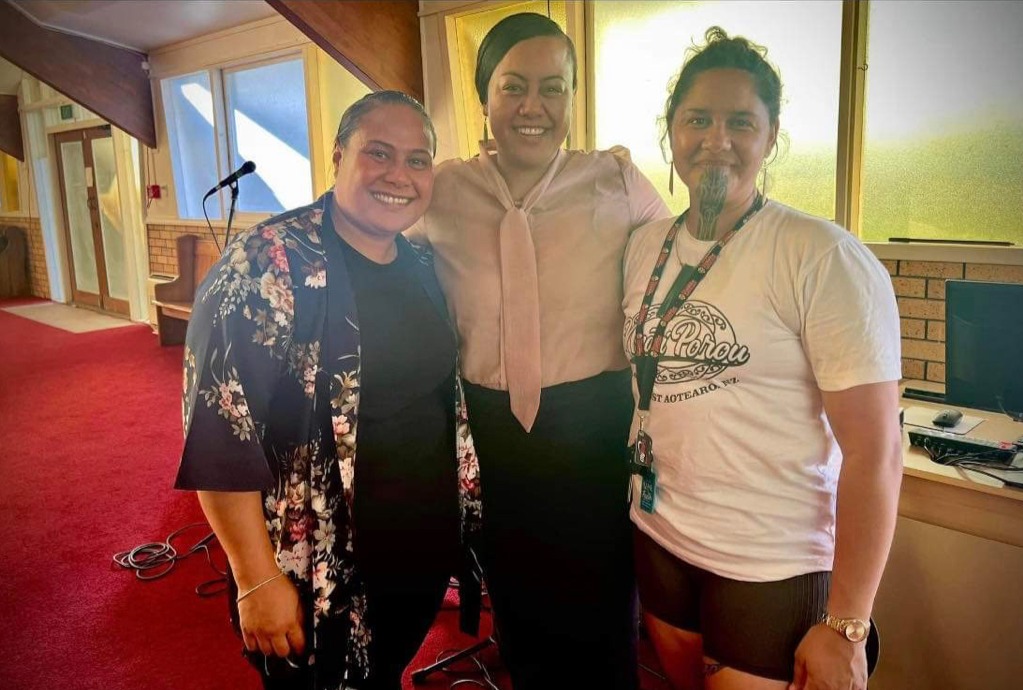
Keri-Ann Hokianga 3

Matariki is coming! What does that mean for you?

I’ve got to be very honest with you, Sister Jannah. I am on a journey of learning what Matariki is. I don’t fully understand or know the Maramataka and how that works. I need to; it’s still something that I’m learning about. And when I do, I am wanting to see God in and through Matariki. Which I’m experiencing already, I’m just not able to name it at this time.

I’m the type of person where you give me a job, and I’ve got tunnel vision. I’m gonna do it, and everything else?—sorry, you got to wait. So that’s probably my take with Matariki as well. God has gifted me with the ability to express his gospel through song, through kapa haka—you want to talk to me about kapa haka, girl, we can go all day, I love it. Māori expressions of the gospel: that’s where my focus has been. I look forward to actually learning more of Te Ao Māori, the Māori world, and seeing God in and through those spaces bless people that are on that journey like me.

I had somebody come and ask me about Matariki—a non-Māori. It’s typically my Pākehā brothers and sisters that would ask—and I am grateful that they’re on the journey with us. Again, God just keeps expanding on what evangelism is: as a Māori evangelist, for me, there’s the importance of being in relationship with Pākehā. Also then with tauiwi—all other cultures in this land. I had directed this woman who asked me to the local kaumātua and kuia. Those are our older men and women that are at the local marae. Because they hold the stories of our traditions; though some actually might not—it depends. I think Māori are still on a journey of reclaiming our identity, through language, our pūrākau, our stories. It’s becoming more and more common to see Māori standing and receiving those taonga, those blessings of our culture.

My hope is that as I learn more about the Māori culture, then I’d see the gift that those things are from God, to continue to use these tools of evangelism and not harm, for my people and for this nation—not just for Māori, but for all people; all people.


Images supplied by Keri-Ann Hokianga

Interviews
More from
Jannah Dennison +

Keep
Exploring

All articles from
this edition

Wintering Well Feature 1000x1000
Common Ground
June 2023 Edtn

Common
Ground

December 2025 Edtn >>
Wait for the Lord

Sign up to receive Common Ground in your inbox

Sign Up
Shortcuts
  • Common Ground Editions
  • Residential Fellowship
  • Vocational Programme
  • Sign Up

Copyright © 2026
Venn Foundation

Venn Foundation

58 Hillsborough Road
Hillsborough, Auckland 1042

Email: mail@venn.org.nz

Phone: +64 (9) 929 4988

Post: PO Box 163138
Lynfield, Auckland 1443

Venn Foundation logo
Stay in the Loop

Receive all the latest information about Venn events, resources, programmes, and updates.

Sign Up
  • Instagram
  • Facebook
Support Us

Venn Foundation is a Charitable Trust (CC28328). If you would like to support our mission and work we would love to hear from you.

Donate Now

Design by Andy Campbell

Venn Foundation logo
  • Instagram
  • Facebook

Copyright © 2026
Venn Foundation

Design by Andy Campbell