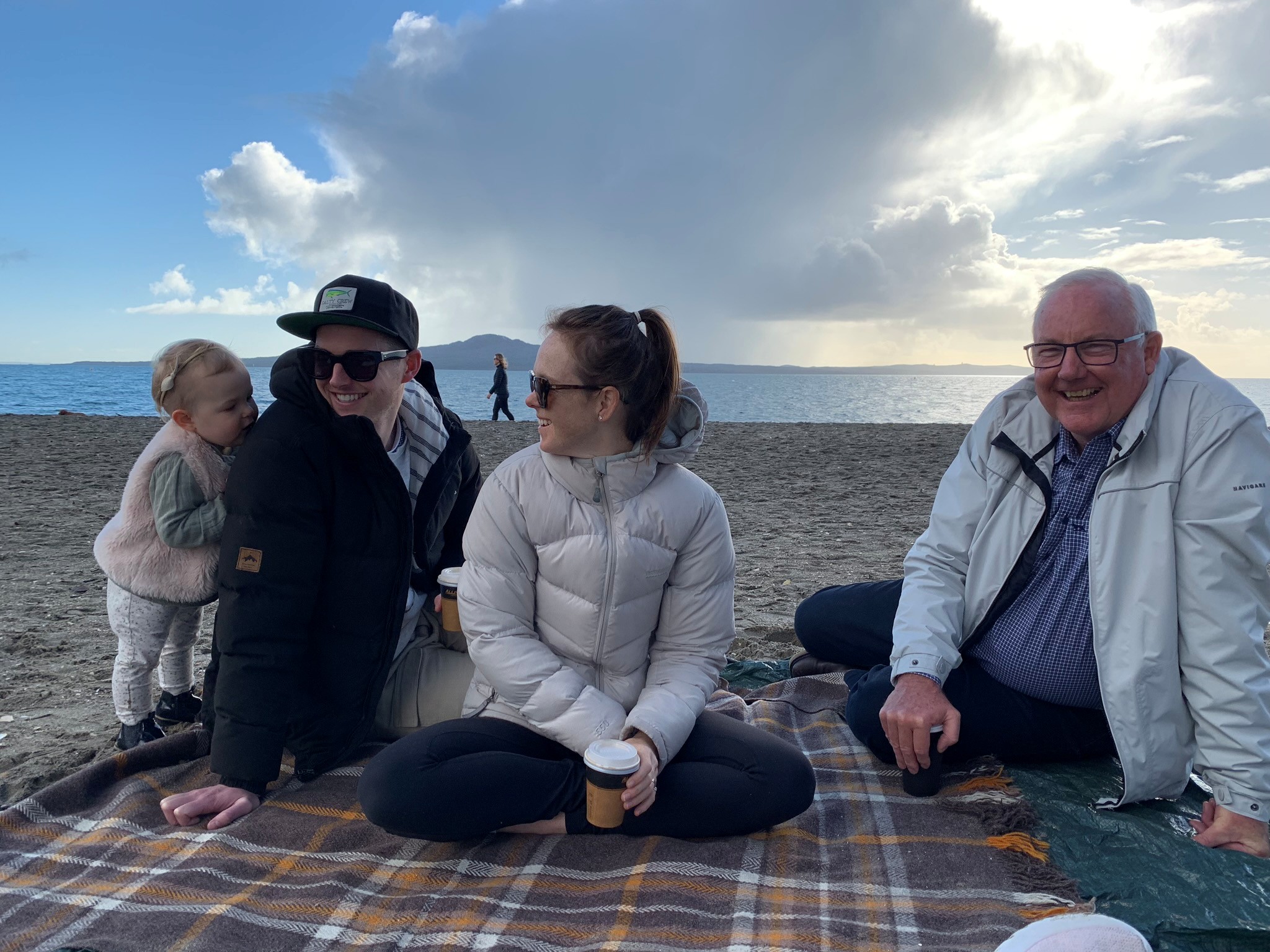
Field Notes: Nat & Josh Milne
Nat and Josh Milne have both been in business for over a decade. Nat founded The People Place, an HR and recruitment consultancy, in 2017. She is also Co-founder and Managing Director of BemindedNZ, helping businesses develop stress-free productivity using a methodology developed in Sweden. Josh owns Anchor Projects, and spends the majority of his time in Design and Innovation Lead roles at Home Construction and Home Foundation; he’s also a Co-Director with Nat at The People Place. Oh, and they’re the parents of four, including twins.
Impressive as this all sounds, Nat and Josh are also a joyful, grounded couple. When they have faced opportunity and challenge, they’ve been open to God’s leading. And in recent years, they’ve gone on a deeper journey of discovering God’s purposes for business. They’ve been asking how this might reorder and focus their approach to business purpose, strategy, risk, and what success looks like. So we were excited to get a chance to talk with them about who they are, what they’ve learned, and how they understand business now—Ed.
Wonderful to be with you both—thanks so much for the time. To begin with, could you tell us about your respective beginnings?
Josh: I grew up in a Christian family: mum and dad, younger brother, older sister. We attended the local Presbyterian church, and then an Elim Church for a while. Then my parents, with a group of people, started a community church. They were always quite focused on community—it wasn’t just a Sunday thing for them. That was the sort of context I grew up in—a really stable home, amazing parents and siblings. My faith journey really grew in my teens. I attended St Aidan’s youth group, and that was where I had my first experience of the Holy Spirit, at a youth group camp. I had an amazing group of friends through those teenage years from that youth group. And then, through Primal Youth Church I got the opportunity to do church with my contemporaries, which was fantastic for lots of reasons—and had its challenges in areas as well.
The other thing about growing up in my family was if mum and dad thought something wasn’t right and they should do something, they just went and did it. Mum for years worked with Focus on the Family and did Bible In Schools, and then she started a programme called Drug Proofing Your Kids which was all about education for parents about drugs. Dad was always an entrepreneur. He was a pharmacist and ran his own pharmacy for 25 years. But he was always wanting to instigate change: he went on to the Auckland Council for two terms, and then back into business, and then a combination of the Ōrākei Local Board and continuing in the pharmacy world through an industry body he leads. They never sat on their hands if there was an issue that they thought needed input.
And we were always big on traditions as well: we have lots of traditions in the family. We’ve got a family bach up near Tāwharanui which my grandparents bought 70 years ago. It’s a very special place: there’s nine properties in the bay, and there’s only been three of them change hands in those 70 years. The community in that place was really special to me growing up as well: fully intergenerational, contemporaries my own age—you know, the whole bay was very integrated. So that’s a really special part of childhood.
Nat: I also grew up in a Christian family. I’m the third of four children, and we’ve got quite big age gaps across the four of us: something like 15 years, top to bottom. My older two siblings had left home when I was still in quite formative years, and my younger sister always felt much younger than me. I had a happy childhood, but as a family unit we were a bit disjointed. My parents divorced when I was young, about 11 or 12, and so life wasn’t all roses. Probably part of the appeal of Josh and his family was that it was like marrying into the Brady Bunch. We’ve been married 15 years now (obviously, the rose-tinted glasses did eventually come off!) We’ve really strong Christian roots in my family too: both my parents came from Christian homes, and have strong Christian faith; my brother is a Baptist pastor and my older sister is an Anglican Archdeacon. There’s deep love in my family—but I have had a different experience of family life to what Josh has had.
With regards to church, I actually can’t remember where we went to church when we were young, but we certainly did. It was part of our family’s rhythm. Around the time mum and dad split up, church became a thing I did with friends. I went along to different churches over a couple of years with friends—and then I became part of Primal as well; that’s where Josh and I met.
In those years, I decided that my calling was to be a pastor. The obvious thing to do at 17 when you’re part of Primal is to go and do church planting school for six months, and then go and plant a church! So I did—and it was a total flop, and became quite a formative experience. I realised that this was: (a) not the path for me; and (b) not very healthy. It was actually quite painful to come out of; for a few years after that, I couldn’t go to church without weeping through the service. We didn’t go to church for a time; certainly, we didn’t lose our faith, but we weren’t attending regularly for quite a while. What’s interesting is that a big part of re-engaging in a meaningful way with church was actually being in business. I found that being in business was such a beautiful way to be able to outwork your faith. For me, business and faith have been really closely aligned, and have been a really important part of my healing journey from that tough late-teens experience of planting a church.
Do you think it’s true to say some of your care for people, that early pastoral interest in people, has translated to a business setting?
Yes. I’ve never thought about it like that. That’s a really lovely insight.

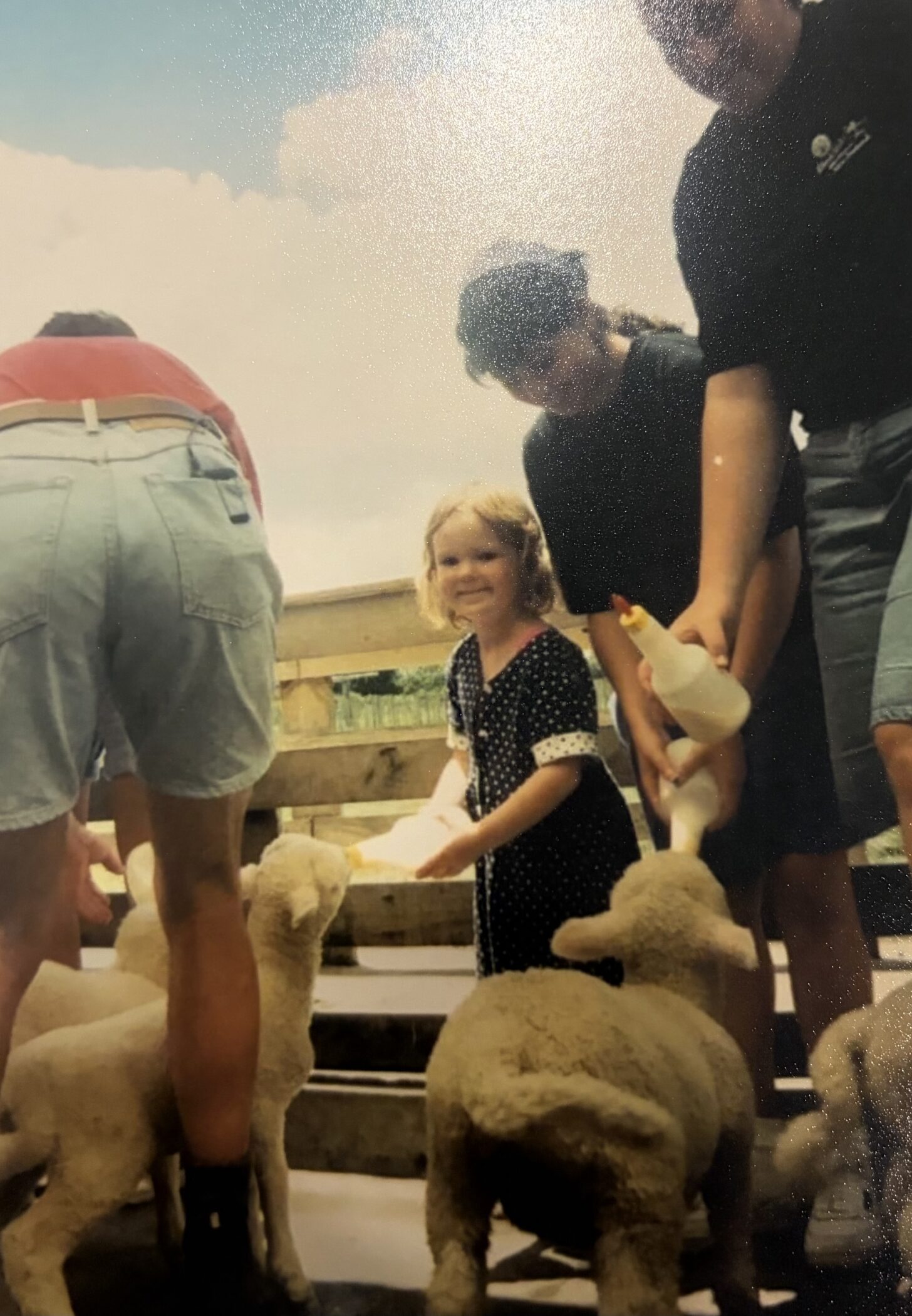
You’ve been married nearly 16 years. How would you describe the way you do married life together?
Nat: We got married super young: I was 21, and Josh was 23. And we’ve often said that is not for everyone, but it certainly was for us. You know, of course not all roses all the time, but actually we’ve had a really happy, awesome marriage.
Josh: Yeah, and founded on mutual respect and trust, and both genuinely wanting the best for the other person. Nats and I were talking about this last night: it’s hard to imagine Chiara being twenty-one and me being thrilled to send her off to marry someone. But we brought out the best in each other—and I think we still do—our families saw that and so they were they were really supportive. There’s always been a love that wants the best for the other person; when you both have that, it works. We’ve also had an understanding of the pendulum of give and take in a marriage: it’s not a static 50-50; the pendulum sits in the middle only for as long as it’s swinging past it. There’s always going to be ebb and flow. And as long as it is ebb and flow, and not, you know, all ebb for one person, that is part of life. We’ve seen contexts where there is this sort of innate need for couples for constant equality—I just don’t believe that’s always realistic.
Nat: The other thing we were talking about last night was that when we were dating, we were 18, 19, 20—pretty young. We were a bit on and off for a couple of years. I was certainly unsure, you know, I had come from a family where the marriage hadn’t worked. I remember saying to Josh at some stage: How do you know that you want to be with me, when we don’t even know what we want to do with our lives? How can you be so sure? And he said to me: “Well, I hope we never know what we’re going to do with our lives! But at some point, we’re just going to have to decide if we want to do it together.” And that was such a powerful thing to say, because from very early on we weren’t expecting: you make a decision, and then life is stagnant. It’s just not like that. So: “Who knows what life holds, but do we want to do it together?” is a great question to be answering. For us it was: Yes, we do want to do it together. Then when things come up that change what one of us are doing, or what we’re both doing, we’re not like: Well, this isn’t what I signed up for. You know, we signed up for the journey.

If I sat down with you just before you got married, what are you excited about? Are you talking about business?
Nat: No! The field that Josh has ended up in wasn’t even on his radar when we got married, and nor was the field I’m in.
Josh: We were so young. In the first year of our marriage, I got my first job in project management, but previously I’d been working part-time for the church. I did psychology and marketing at university, and I was really heading down that health psychology, sports psychology path. Really the reason I didn’t in the end was that you had to train either as a clinical psychologist or do a health psychology masters. When I talked to different people in the field, the reality in New Zealand was you had to be part of a clinical practice and specialise in sports psychology. And even if you got there, there weren’t a tonne of opportunities, at that time. The clinical side never really called to me—and I think that’s such an intense job that you do need a certain degree of calling.
Nat: I think the other part of that was the sense that you would have to probably go overseas to really pursue it. You felt like really life was here; I think there has been a bit of a draw and a calling to New Zealand. Even when the conversation “Do we go and live and work in London?” started emerging, we looked at each other one day and said: We’re both in jobs that we love in our different ways, and what we’re actually looking to do is to travel. But we love what we’re doing here in New Zealand. That’s relevant because now we’re in business, we have a really strong sense of wanting to contribute to New Zealand. We do feel really grounded and called here.
Josh: On our wedding day, a family friend came up to me after the ceremony. We were chatting and he was like, Oh, we should have a coffee sometime. Our families have known each other for a long time, but I never knew what he did. While we were away on our honeymoon, I figured out that he was in project management and construction. They were looking for some help. I’d worked on construction sites as a labourer and hammer hand, so I knew a little, but really, not a lot.
Nat: He had seen Josh run events at St Pauls and was like, Yes, I think Josh would make a great project manager and I would like him to do that for me.
Josh: Yeah, so that was the start of me being in construction.
Nat: My early years were in agency recruitment. I did that for about 6 years. People don’t think very highly of agency recruiters—but I loved it, and I was really good at it. At that point, I was in the largest publicly listed recruitment company. In my last year there I moved into a business management role; and I hated it. I had been running a team, mentoring and gathering people around a goal and helping them do better. But at the business management level it was all numbers, and it sucked the life and song out of me. On paper, it was a great opportunity. I did it for a year. On the 9th of January, I was due to go back to work; Josh and I were playing tennis, and I had these huge sunglasses on. And he was like: Is everything okay over there? Because I was just crying behind my glasses. We went: Okay, it’s time. I didn’t have any plans; I just needed to resign and figure out what’s next. And so I did. For about six weeks, I was in between jobs. I spent lots of time just sitting on the beach and thinking about what was next.
I had a client message me saying that he was looking to put a performance review process into his business and could I give him a hand? I wasn’t in HR—recruitment is quite different. And so I said to him, Hey, look, I am not an HR person—I have about 3 months of experience working in the HR team at the recruitment company—but given what you’re wanting to do, here’s what I think we could do. I was super honest about my capability, but also felt like I could do this piece of work. And he said, Yes, please, let’s do it. I had scoped a piece of work for about 14 months in and out of the business at key points as they developed the process that they needed, so it certainly wasn’t full-time work. But it was enough. On a whim, I said to him: I’m going to trade under a business called the The People Place—let’s go. We signed that contract on a Friday, and on the Monday I found out I was pregnant with Chiara.
That was the start for us! We were intending to have kids at some point, but not now! I’d just signed a 14 month piece of work, started my own business, and now I was going to have a baby. But that became so formative for the business because right from the beginning we knew that I was either going to need do something with this and build a team, or I was going to need to work for eight months and then stop. Because the business that I had a contract with was well networked, there was more work that came out of it. I had a really strong sense that year, that I knew exactly who I wanted to hire. She was the HR business partner of the recruitment company I had left. I knew that if I was going to do anything, I wanted her on the team. And I remember I had this strong sense of God saying to me: I’ve got this. In the end, Lucy started with us about a week before Chiara was born. Yeah, so: we kind of fell into business, really.

You’re listening to God.
Nat: Yeah, trusting. I mean, I wasn’t spending hours praying or anything like that. But I certainly had that strong sense of God saying: “I’ve got this”. The other piece in there was that I told this client who I’d just signed this contract with really early that I was pregnant. I set an agenda for our first project meeting, and right at the bottom of the agenda was: “Possible project timeline change.” I got into the meeting and was like, Oh, I can’t get through the whole meeting without telling him! I’m going to have to call it early. So, I told him. He looked at me and said: “Nat, what a delightful distraction! There’s more to life than business. You’ll figure it out.” That was such a powerful thing for him to say to me, because the world I’d come out of wouldn’t have responded in that way. It was just so gracious. He never asked me what my plan was. He just totally trusted that I would figure that out. It was so lovely, so lovely.
Josh: When Nat was about to have the baby, and through that time, I’d been working for a company for seven or eight years, and was in need of a change. There were three options on the table: a bigger role in the company, a sort of double down, dig in—I was considering that because they had a big client where I had amazing opportunities to run big projects that most people at that stage in their career just wouldn’t get; or do I go to a bigger project management company and get experience in a bigger company?; or, do I go out on my own and see what that looks like? We were about to have Chiara, and I got the offer from the existing company, which was a good offer; but as soon as I looked at it I just had this sense: Nope, it’s not for me.
We basically worked out a budget and went: I can give this a go for six months, that’s a realistic runway that’s not going to cripple us. If I can make it work, happy days, and if not, I’ll find a job. This is pre-COVID, the economy was fine. Very early on, I think it was February of 2018, I had a coffee with Israel Cooper—a friend of a friend put us in touch; and then I met the Auckland General Manager at Buildtech (Home Foundation Group were called Buildtech at the time). They needed some infill help. I helped them out and then basically never left. So that was how I got into it. We charted quite different paths in business, Nats and I, in parallel, and we talk a lot you know, obviously we’re always each other’s sounding boards.
Nat: So, The People Place was my thing operationally. Josh was absolutely journeying that with me, but in no formal capacity. In the immediate post-COVID years, our revenue increased quite a lot, and we staffed up to deliver that work. Then operating costs went through the roof. We ended up with this big team, revenue’s good, but profits are shocking. We were running at a loss for about 8 months. And obviously, we own this business—not wildly deep pockets to service a business running at a loss for too long. I felt trapped in the business—really, really trapped.
I ended 2022 crying on my bed, over-exhausted. We’ve got two young children at this point; I’m working part time, but the business is going backwards. But that summer, I met a Swedish lady who is a friend of Josh’s cousin up at the family bach that we were telling you about. I remember her kind of bouncing along the beach telling me about her stress-free productivity business. And I just thought, Whatever. That is just not a thing. Anyway, we got to know each other a bit that summer and she said to me, Nats, I’ve always wanted to bring this business to New Zealand. Why don’t we do it together? I was like, Anna, have you heard me? I have a business that’s failing. Two children. Sometimes I don’t even shower. So no, thank you; I don’t have capacity for another one. She said, Let me take you through the programme, and then decide what you think.
Josh and I ended up doing her programme, Beminded, together. Within two months of doing that, I had got The People Place running profitably again and had dropped a day out of my working week. So I was like: This is amazing; yes, we absolutely need to bring Beminded to New Zealand. I had found this new passion that I was keen to do, alongside finding The People Place really draining, even though it was running profitably again. Josh had said several times: Why don’t we get someone else to run it?
This was actually where I was at when I came to the Venn God’s Purpose for Business course that Nathan [McLellan] ran. We were thinking about selling The People Place, because I just felt like I need to step away from it. About a month later, I find out I’m pregnant with twins. It was a real moment of chaos.
Josh: I think the important parallel story was my integration into the Home Foundation team. I had this really unique opportunity to be working in my own business and also be part of this leadership team at Home, where I got to see firsthand how people who intended business to be for good worked it out—the full journey of that. I got to see how a bigger business operated, how it made decisions, how it sought advice, how it was governed, what took priority—all those things that are really hard to learn on your own. Nat and I were on these parallel paths: she’s growing this business and team, and I’m on my own but developing leadership skills as part of a team. That was hugely formative.
Nat: And: one of things that had emerged in the lead up to this change was a transition from seeing business as an asset to a vehicle for good.
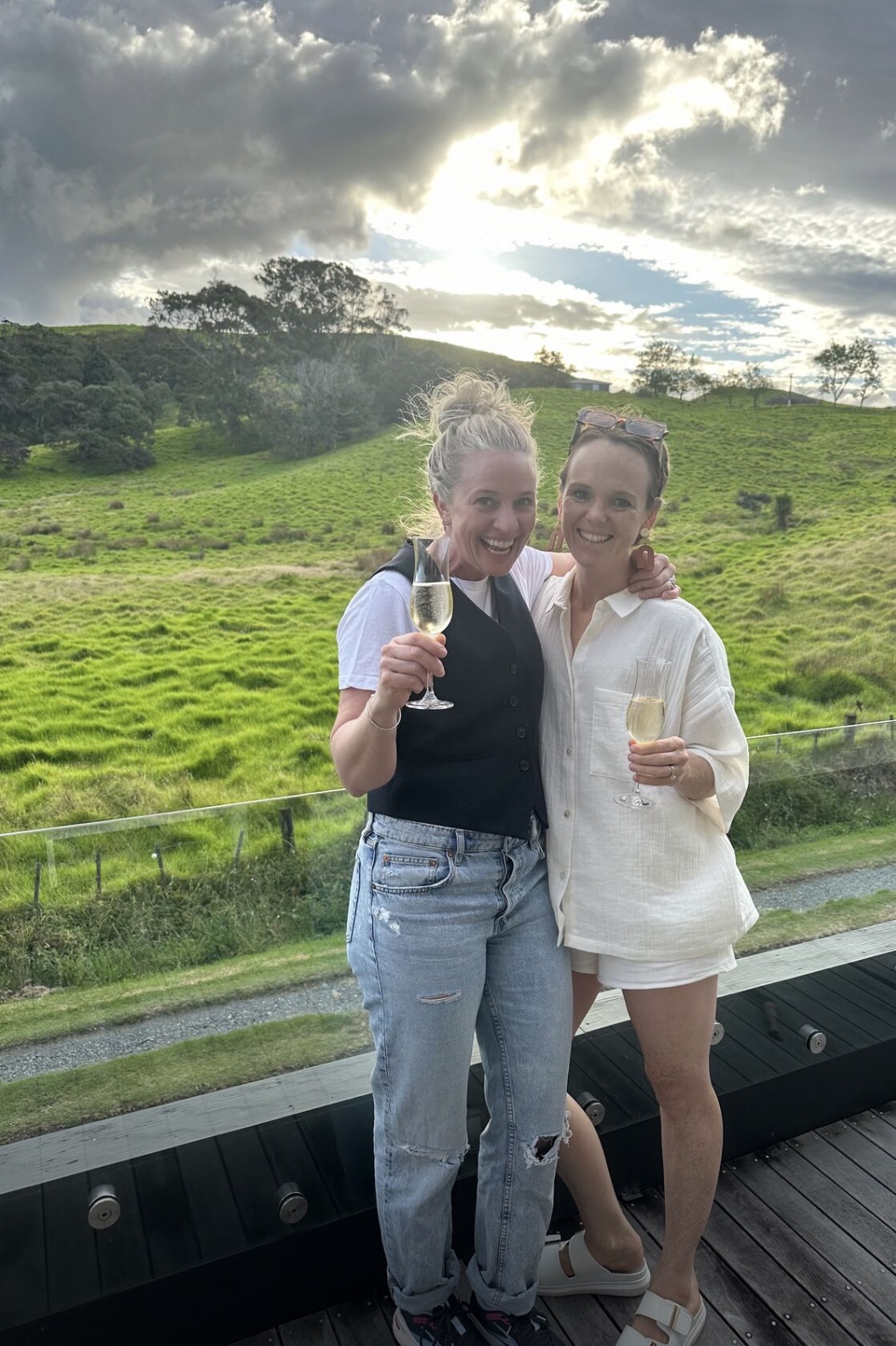
Celebrating the launch of BemindedNZ
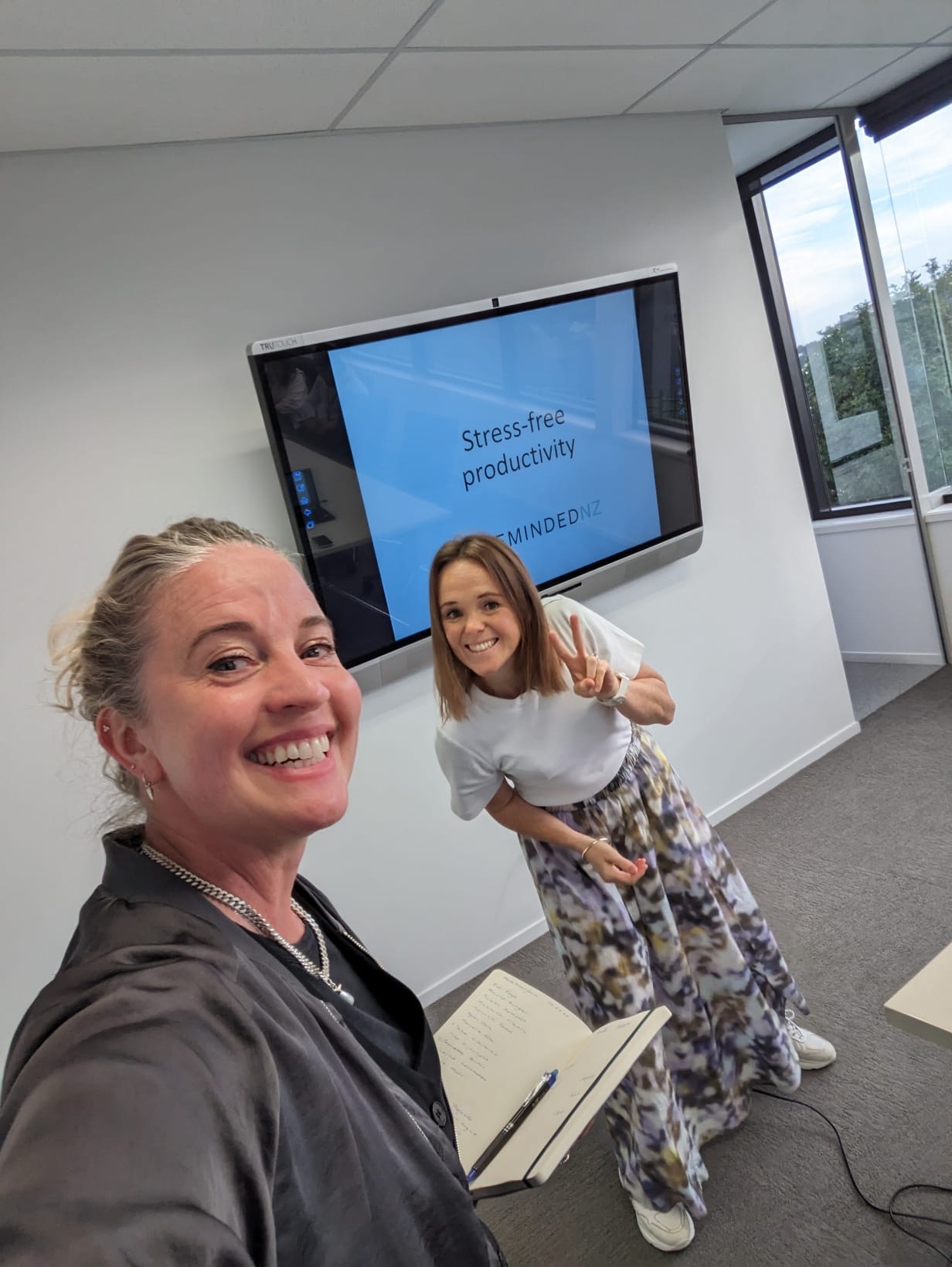
With Anna Bojlert, founder of Swedish Beminded
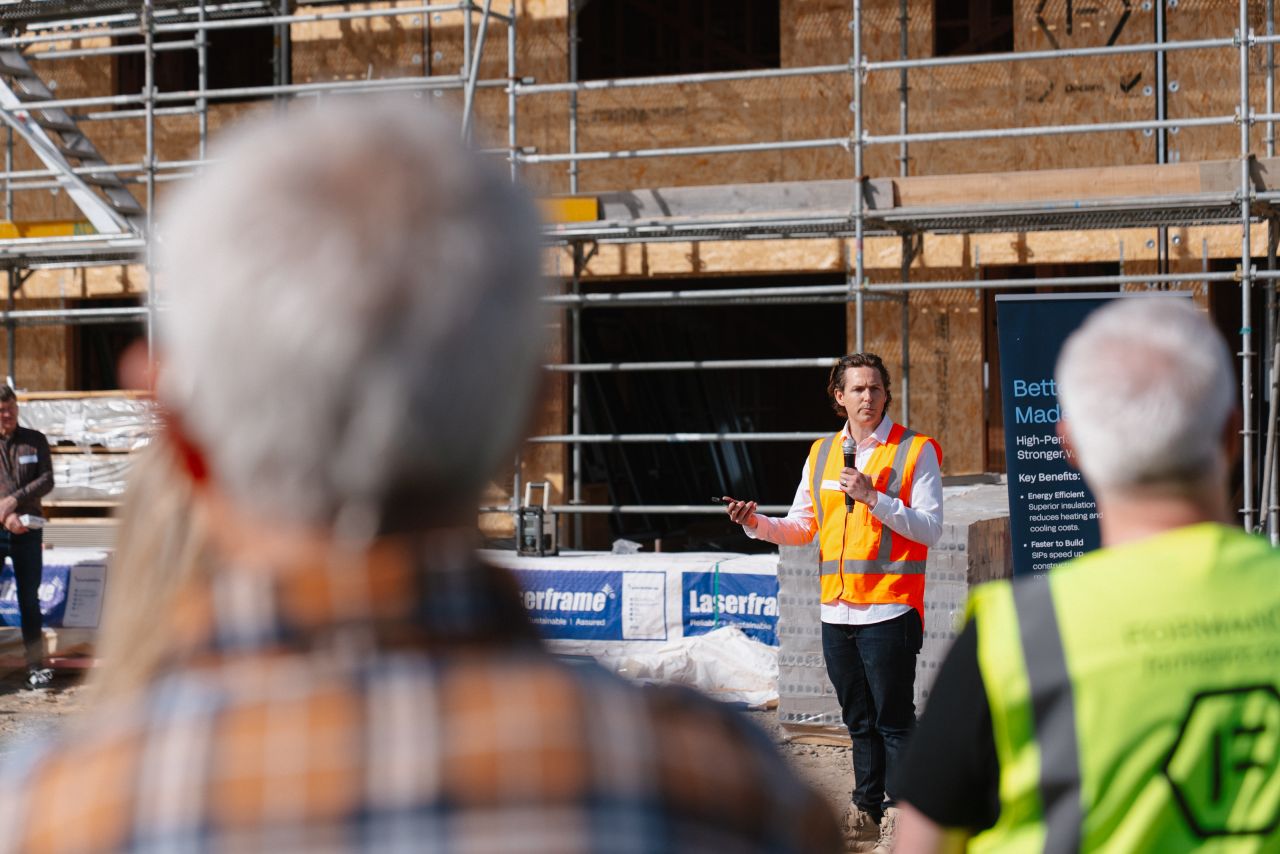
Josh in action at Home Construction
How did that shift come about?
Josh: I think of a few things. A couple of years before we had joined the Hepara community of Christian venture-builders. Hearing stories of those people started to sort of form our thinking around God and business. That actually, business doesn’t have to be: make as much money as you can and then give some of that money away—no, we can do good with it on the way through. We went on this journey with Jessica and Israel Cooper that actually really helped us on; and the God’s Purposes for Business course was formative. We’re early on in this journey; this is like seedling stage for us.
Nat: The responsibility shifted away from the idea that good stewardship meant protecting the asset—anytime that the business wasn’t doing well, it didn’t feel like good stewardship. But this is quite different to going: it’s God’s business. It’s actually God’s business in the first place.
Josh: There’s real freedom in going: we keep this open-handed to God, and do our best to pay attention to reality, to make wise decisions, to seek wise counsel from people around us. We’re stewarding something, and if it’s not profitable we can’t do any good—you know, we have to make good business decisions. But there was a real freedom in just going: we feel like this is something that is of God. He’ll open and close doors. Our hope is that this business has a long arc; but if not, that’s actually ok.
Nat: We put the business on the market and had semi-interest, a few lowball offers—nothing that we considered seriously. So we transitioned an existing staff member into a business management role so that I could step away. I was seven months pregnant with twins—it was a lot. And then days before I was due to go on maternity leave we get this offer that’s basically at the asking price.
Josh: Yeah, we had gone: We have to put a contingency plan in place. Like, Nats physically cannot run the business—we have to make sure the business continues to operate or we shut the doors. And then we get this offer. So we said: we’ll think about it over the summer break. So, we had the summer holiday where we just recouped, and Nats grew babies. Then we had this moment where we sat down together. What do we think about this offer? Both of us, again, had this very strong sense that, no, actually, it wasn’t right.
Nat: What was so freeing about that was: all of a sudden, right at the last minute, we get the offer that’s pretty much at the asking price; this is the whole thing that we’ve wanted to be able to move it on. And to feel so calm, going: That’s not God’s plan for this business.
Josh: I think of it’s one of our highest faith-and-trust-in-God things that we’ve ever done. We genuinely felt really free in it; it actually didn’t feel like a difficult decision. But we felt if we are saying that this business is for good, we believe that God is in this, and we can have a real impact by doing this. It’s quite an amazing feeling; like, we really have released it. It’s really hopeful.
Nat: I think the other thing that in the decision not to sell was that we decided that Josh would become a Director of The People Place, that for the future of The People Place, it was us together as a couple. Josh has then brought all of this amazing experience that he’s had with Home Foundation Group.
With this charting a new path, I have totally found my absolute love for the business again. I think it is my life’s work to be involved in the world of work. Work is such an important part of life! So now that we can use The People Place to help make work better is so cool. Just before this interview I came out of a meeting pumped; I just was like, Oh man, I love this. You know, work is such a big part of life. And when it’s great, it’s great. But when it’s off kilter, it has a big impact on life. It just feels like such a worthy part of the world to be involved in. And that’s so cool. That’s so cool.
Josh: And so, we then started the journey with Venn Centre for Business and with Nathan because Nat and I both wanted to say: Okay, if this is what we believe this business is for, we actually want to ground that business in some good theology: for us as directors; but then also for revisioning and mapping how we outwork what this is for. Part of making the next wise decision is you actually have to take the next step, you know

Could we talk about failure and success? What’s success now, for you?
Josh: The last time we saw Nathan, he was with our team and it was the first time we had shared in depth the work that we had done with him. There’s a degree of vulnerability in that, because we’re going: This is something that we really believe is a calling for our lives. Here you go. What do you think?
Nat: We came away from that day going: That feels like a success: to have been thinking some things for a couple of years, realising that we needed some help getting clarity and putting it into words and grounding it; and then to share that with the team and have them go, Yes! That is just so cool. So that I think would be our major success of late. It’s not like, the economy is great, you know, it’s not like the business is thriving currently in purely economic terms. But we are investing really well for the future, setting us up to do the thing we think this business exists for.
Josh: We really believe that, work is good. We were created to work, it’s God-intended and it’s a really good part of humanity. It helps us be creative, it helps us order things, it helps us be social, like it helps us contribute beyond ourselves—all these good things. But as Nat said, when it’s off kilter, or when it becomes like the focus of identity, it can be really toxic. So, there’s a real hope and vision for us to help businesses make work good. What does work good work for businesses in New Zealand? And the flow on effects that that can have, you know, to our communities.
The word that comes to mind is one you’ve both used already: hope. You’re very hopeful people. So, imagine you’re calling others into a life in business leadership. What’s your invitation to them? What do you direct their attention to?
Josh: It’s such a Kiwi thing to go it on your own and build it all from scratch, you know, No.8 wire and all that stuff. And lots of those attributes are really good: we’re resilient as Kiwis, we’re innovative, we’re hard workers. But: remain humble and seek wise counsel; seek people who can feed into your life with hope but also with wisdom. Getting a leg up or learning something from someone, or succeeding because of advice someone gave you, isn’t a detriment to your own character or hard work! That’s just good business, good community.
I love that posture of both humility and confidence: if you’re an entrepreneur, nothing happens unless you do it or you bring others around you to do it; and there’s heaps of people who will willingly feed into you if you are humble enough to ask and respectful enough of them and their time.
Nat: I feel very grateful for one of the lessons that my mum taught me from a really young age, which is that everything we have is ours to share. What is money for? When the business does really well, that’s awesome. What’s that for? When the business is struggling, okay, what do we need to do? Like what is money for? What is this work for? The idea is that you run a business profitably. So, if that goes well, I think “What is money for?” is a great question to answer.
And then: you can probably be underwhelmed in what you can achieve in a year, but overwhelmed at what you can achieve in 10. I am not talking only about profit, but what the business could achieve. We’ve been really grateful for the expanding of our minds: the long arc that is ahead of us. We’re not bound by financial quarters; we’re looking at a lifetime or maybe more than a lifetime. We recognise that we’re doing something that’s important for the world; we’re working towards things that we believe are the right things. I remember doing the billing in the early years. I used to get stuck in the month-by-month: Is it a good month? Is it a bad month? And I would feel so flat, regardless of what the numbers were, because my focus was on that bit. That’s not the thing that’s going to keep you going.
Last question: how have you navigated family life in the midst of all this?
Nat: We have four children, and Josh is incredibly present when he is at home. I’m with the children most of the time at the moment—our twins are 18 months old now. This has been a hugely important part of our journey, because we haven’t been prepared to throw everything at the business, at all. There’s been some real parameters around what time and energy we are prepared to give it—because we’re trying to raise four tiny humans as well. Josh has taken time off work every time we’ve had a child. For quite a number of years (this is pre-twins, twins really shifted our gears), Josh didn’t work full-time but kept some capacity. We weren’t doing like 50% work, 50% parenting, but there was the sense of: Oh, okay, Nat’s work is picking up a bit at the moment—is Josh going to be home a bit more? Is Josh is picking up a bit more? Okay, Nat might need to gather the team. Obviously, we both work for ourselves, and typically, the more you work, the more you earn. But that was not the goal. You know, we needed enough. But we have really chosen to be to spend a lot of time with our children. Sure, we could have grown it faster, whatever, but we weren’t prepared to put more time into it.
Josh: A real intention switching modes when we’re home as well. It’s so tempting as a business owner to always be on your phone or do a little bit of work in the evening or in the weekends. And there are times where we both have to work an evening. But the baseline is we do our best to protect our weekends, and that when we do end the workday, we’re present.
Nat: We have a home office, so we keep our work in the office rather than have it all through family life. We also talk to the kids about the fact that our work is important and good. We’re not talking about work as this thing we’re trying to escape. It’s not work to do life, it’s work as part of life. They’re not experiencing us, like, huffing away, going: Naw, I’ve got to go to work…
Josh: I mean, Chiara has business ideas all the time.
Nat: We’ll be working for her eventually, I’m sure!