Shortcuts
  • Common Ground
  • Summer Conference
  • Residential Fellowship
  • Vocational Programme
  • Sign Up
  • Instagram
  • Facebook
  • Lead Programmes
    • Summer Conference
    • Residential Fellowship
    • Vocational Programme
    • Evening School
  • Vocational Centres
    • Centre for the Arts
    • Centre for Business & Leadership
  • Courses & Events
    • Conversation Evenings
    • Short Courses
  • Resources
    • Store
    • Common Ground Magazine
    • Venn Presents
  • Who We Are
    • About
    • Our Story
    • Our People
  • Donate
  • Contact
Venn Foundation
58 Hillsborough Road
Hillsborough, Auckland 1042
Email: mail@venn.org.nz Phone: +6499294988
PO Box 163138
Lynfield, Auckland 1443
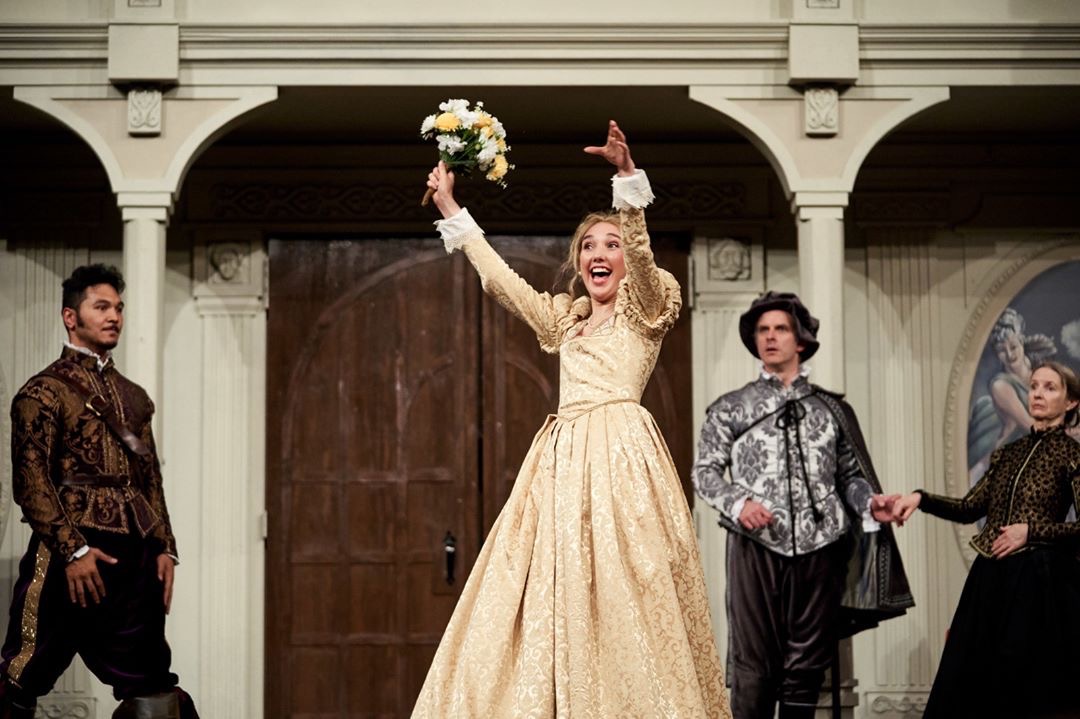
Touring Perth with Pop-Up Globe 2019. Image provided by Eddie Bijl & Ripeka Templeton Bijl.
  • Link copied!

Field Notes: Eddie Bijl & Ripeka Templeton Bijl

By Andrew Shamy >> 26 min read
Arts Interviews

Tell me about your respective whānau and early years. Where did you grow up? What are your families like?

Ripeka: I was born in Dunedin—my parents were studying at Otago. Then we moved to the UK, to Windsor. My Dad’s a Presbyterian minister, and my Mum trained to become a musical theatre actor. When my parents divorced, my Mum moved to Germany and my Dad was in London, so I grew up between city life in London, and church, and then the theatre—a backstage baby; I lived in Germany for two years and became fluent, just by being thrown in the deep end! I think it was quite a peripatetic upbringing; I was always going back and forth. I don’t know if either really felt like home, but the theatre and, in a sense, the church, felt like home at different times.

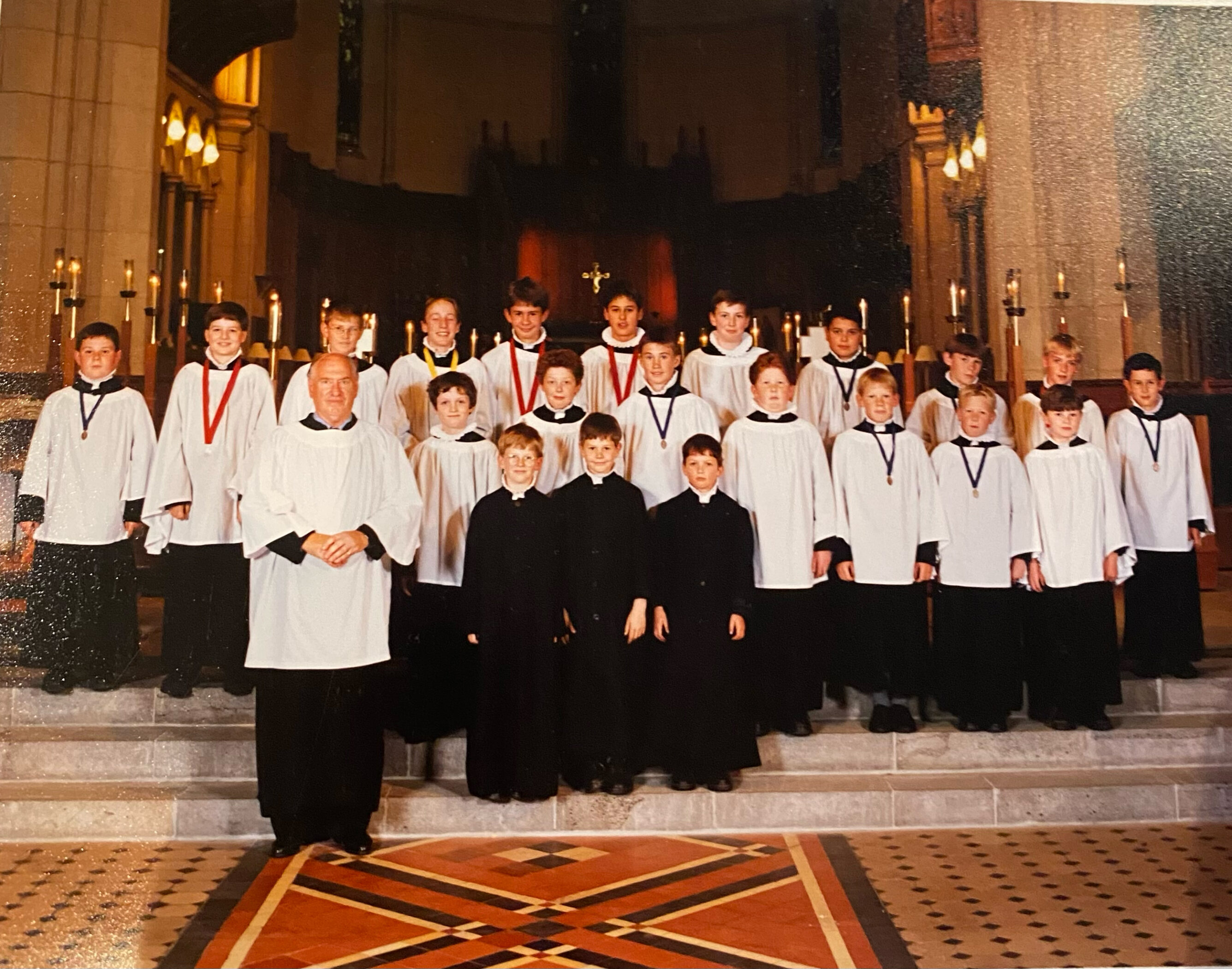
Eddie: I grew up in Christchurch. My family are all still there. I’m the baby of my family. We grew up going to church, a little parish called St. Aidan’s in Bryndwr, and then I joined the Cathedral Choir at the tender age of eight and sang in that choir for five years, all through primary prep school. I continued singing in chapel choirs through high school. So, choir and liturgical music have been a big part of my growing up. I come from a musical family but not so much a theatre family. If you said to someone in my family, “You can make a career out of acting and the arts,” it’d be like, “I don’t know how to do that”—nobody had really done that in my side of the family. Pushing into those territories was like uncharted waters—new stuff—and a lot of figuring it out along the way.

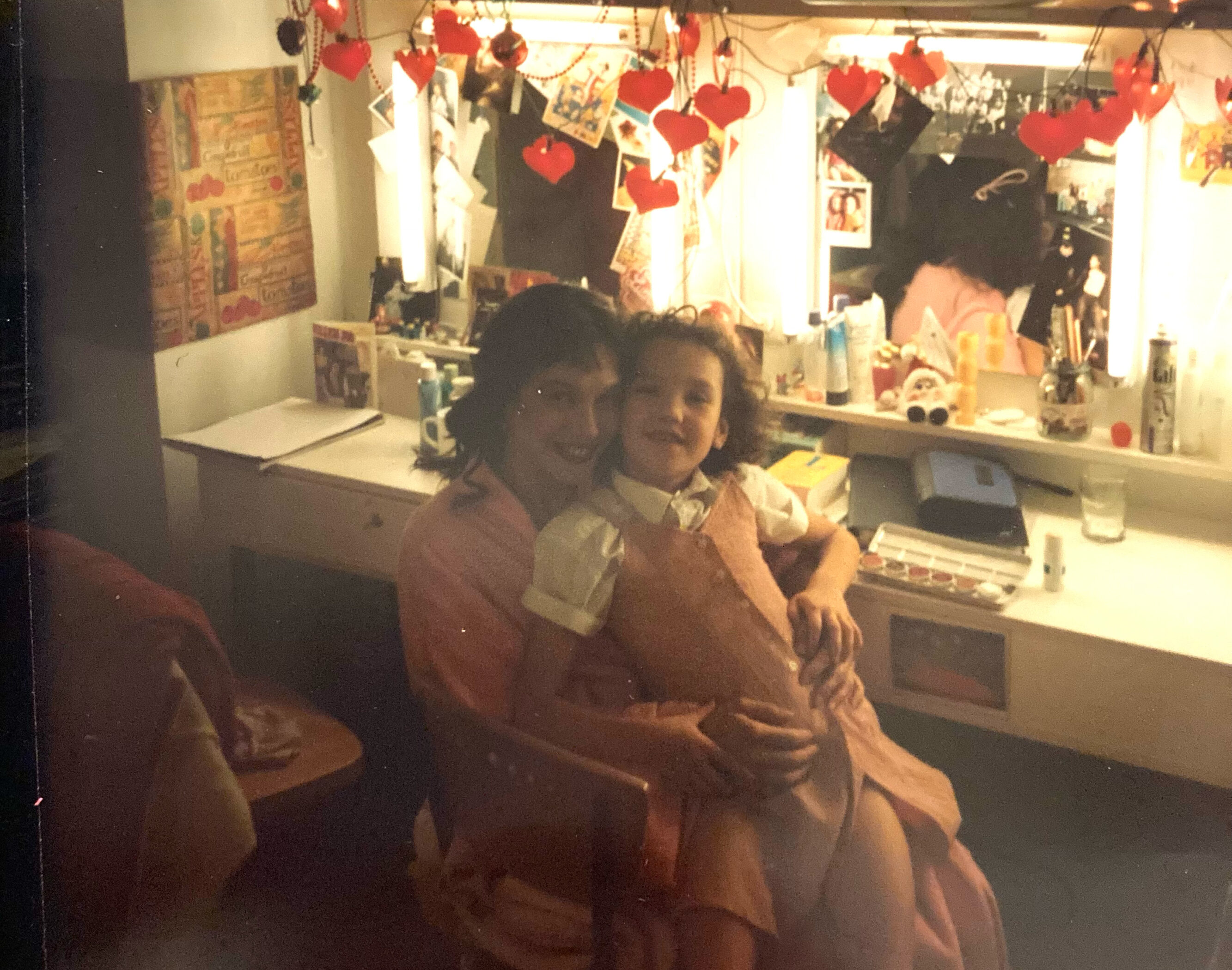
Little Miss Muffit - My First role
Little Miss Muffet, Ripeka’s first role
Christchurch Cathedral Choir days Eddie front row middle_
Christchurch Cathedral Choir days, Eddie front row middle

How would you name the faith part of your childhood? What was that experience like? Was it a big part of your childhood?

Ripeka: I’m so happy because I’ve always known God and known Jesus—I grew up with a very strong faith. There was never a point when I suddenly had this realisation; I just always felt that love, and I could talk to God as a child very easily. I lost that as I got older. But, as a child, we just used to have conversations. That’s why I think, when I see the children at church, I think it’s wonderful. It’s so important to have this loving, nurturing environment. I was really lucky in that way to have that because there was never a time when I didn’t know. It’s absolutely stayed with me, even at the lowest points—I’ve never been able to truly say “I don’t believe” because I’ve just known that love.

Eddie: I grew up in different denominations of faith, but then, later, I happened to be in those Anglican spaces. I think for me, singing in worship in the choir was just so transformational—singing scriptural songs and especially the Psalms—and I often find that it’s like a memory bank. I couldn’t tell you some number; I couldn’t quote you a specific psalm. But often in life, there have been words from these songs that have come back to me. Also, hearing Scripture in that daily setting—it’s definitely been something that has stayed with me. The other thing is I’ve always loved stories, and when I was a boy, my Dad would often read a children’s Bible to me, and I just loved the stories in there. As I got a bit older, I’d often be reading those stories myself in bed, way past lights out time, especially those Old Testament characters. I think that for me it provided a really strong base for faith to grow as an adult. I did some of my own searching around other denominations for a long time as well. I’ve definitely settled as an Anglican in my call to ordained ministry. Having said that, I have a firm and core belief that the Anglican Church doesn’t have any control or ownership over God—that we are just one expression of faith.

What were your journeys into acting?

Ripeka: My best friend when I was little—Sophia—she wanted to be an actor and, immediately, so did I. We did everything together. We said that we were sisters—we were both only children at the time—and we both wanted to be actors. So, I put myself on that path pretty quickly. I started acting lessons and chose to do acting throughout school. I did a production of Oliver, and, for A levels, I did Streetcar Named Desire, and I was Blanche. Then, I wanted to go to drama school. I thought university sounded so boring. When I asked my Dad what it [university] was about and he said you don’t go to lessons you basically go to lectures, I thought, “You’re kidding me! You just go and listen to someone talk for three hours? I’m not doing that.” I wanted to get out of school; I wanted to do the big thing. So, I got to drama school after a lot of work because I’d become a little bit shy during my teenage years, and it is a lot of competition to get into drama school in the UK. But, eventually, I got into the Oxford School of Drama.

My mind was just blown by Shakespeare—I was totally entranced. Acting had been part of growing up—I dressed up as Titania [from A MidSummer Night’s Dream] when I was little, for Halloween. So, I had always loved Shakespeare but, oh my goodness, when I got to drama school, I just thought, this is what I want to do. I don’t want to do screen acting, I don’t even want to do modern plays, I just want to do Shakespeare because of the language and the emotional connection—and the stories. It’s just like today, you know, they’re just as epic. It’s different clothes, but we go through the same range of emotions as the Shakespearean characters.

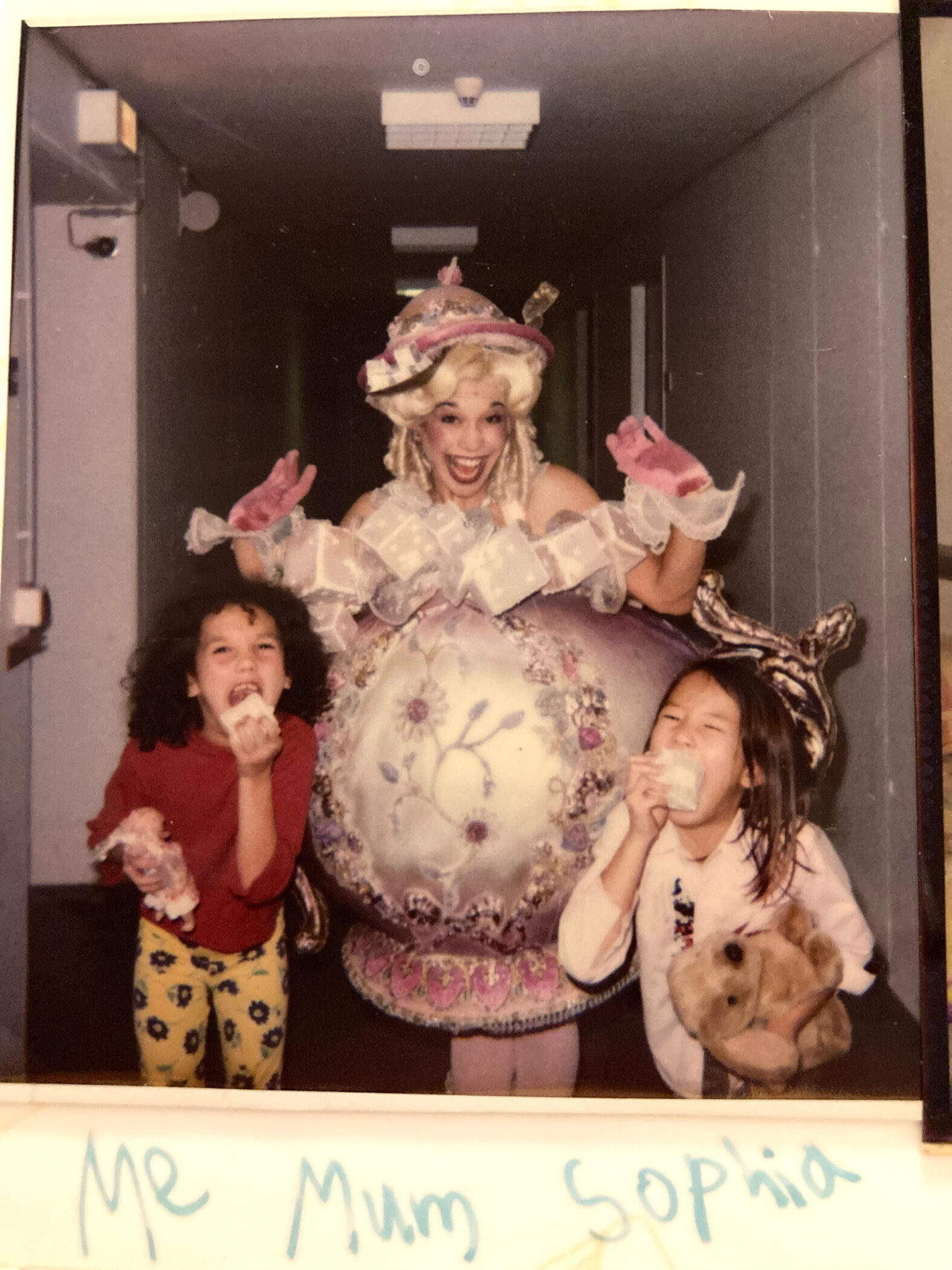
Stuttgart backstage when mum was in Beauty and the Beast
Ripeka backstage in Stuttgart with Mum and Sophia

I’ve heard actors talk about the backstage, that there’s something lovely about it. Can you tell me some memories about being backstage, growing up?

Ripeka: I think that was honestly what got me through in Germany. It was just the happiest place because some of being in Germany was quite hard. I was there with my Mum—it was just us—and we were obviously not German. Actually, we weren’t really English either. I didn’t have the family unit, but it’s the great thing about theatre—it actually doesn’t matter who you are, everyone’s accepted. It’s the rainbow community, it’s the international community—we had people from all over the world, and a lot of us couldn’t actually speak German. Dancers, actors, from all over—it was just wonderful. Part of that, I think, has actually informed my calling now, which is that, you know, places can feel like home. I didn’t know what was going on. I just accepted it. They were so, so wonderful and warm to me. They were always playing and buying me little Kinder eggs and we were just—you know—we were our own family.

At that time in Stuttgart, people were still a bit funny about foreigners, and I think we all also connected about this experience of living in Germany and not being able to put the rubbish in the right rubbish bins, and getting shouted at by old women and getting spied on by people. Backstage, I was just up to mischief. I used to do cartwheels in the green room; I managed to split my leg open. I used to run around collecting all these water bottles to get funds to get a bit of money back from the canteen so that I could buy a chocolate bar. I used to take the canteen trays and slide down the hill when it was snowing. I used to dress up in the costumes. My Mum used to come back during halftime, and I’d completely painted my face as a cat or whatever. I used to play in the hallways and with bouncy balls. One time, the ball went past my friend, and it went down the metal staircase, really loudly. We had to be silent during the show, and the ball went down the metal staircase really, really loudly, which led into the orchestra pit. I could just hear it going bang, bang, bang! We just ran. We just had to run and hide. But yeah … it was freedom. I sort of wish everyone could have this experience.

Ripeka backstage Stuttgart when mum was in Beauty and the beast
Ripeka backstage in Stuttgart with Mum, who was in “Beauty and the Beast”

Eddie, what was your journey into acting?

Eddie: It was a very different sort of journey. I was quite shy as a boy and had, I guess, a bit of a fear of public speaking. I was put into some speech and drama classes. I loved my teacher and had a great time doing that. I was also quite a perfectionist as a boy. I would often be doing a speech, or something from a play, and I’d have an idea in my head about what it would be, and then my body wouldn’t match up with how I wanted my expression of it to be—how I saw it. It would be really frustrating for me, and I would often cry—I didn’t really have the language to articulate what was going on. So, there was a frustration and tension around that aspect of it. That was all solo drama classes.

Then, in high school, I ended up taking drama as a subject. It’s far more ensemble in nature. It just freed me up in a big way to be present and alive and engaged in that space, and it’s about relating to other people with that aliveness and freedom. Then, I moved to another drama teacher—who was also wonderful—who was running the Repertory Theatre in Christchurch at the time. I ended up being in quite a few Shakespeare plays with the repertory in fairly minor roles. There was one summer where I was playing one of the Italian guys, Samson, in Romeo and Juliet. I was in the sixth or seventh form, and I remember the director in the final rehearsal before going to production saying, “Oh, you boys look a bit pale to be in the hot Italian sun—we’re gonna send you all off to get a spray tan tomorrow.” So, I got sent off to get the spray, came back to school, hadn’t actually showered all of the stuff off, and it’s orange all over my white shirt … you know, there’s a fair amount of public ridicule and scorn through that process. All for the love of the craft, I suppose!

For me, the backstage environment was actually, I suppose, kind of similar to being in the choir—that ensemble nature of things, with people doing a common task, sharing in that goal. It was a lot of fun. I moved on, continuing to do shows with repertory, but it was all very much a side hobby. At that point I was doing my first degree, in law and commerce, at the University of Canterbury, and I really thought I was going to go down that road with my life. Then, I was on a holiday with my cousin, and she said, “All you’ve talked about on this trip is the theatre and acting—I’m just reflecting back to you what I see. You seem to be struggling with the academic path, and the law side of things.” Just hearing that from her, I was like, “Okay, I need to give this a go.” So, I auditioned for drama school in London. It’s a very competitive environment! I went to the Royal Central School of Speech and Drama in London and studied under Ben Naylor in a very specific one-year master’s course focused on Shakespeare. There were 15 of us in the class, and we made several productions. That really opened my eyes to a way of “playing.” Also, it really opened me to how you have to be okay with making mistakes—it’s from the mistakes that we actually learn.

I also wish that everybody could do acting training because it just makes you so emotionally available. In the rehearsal room and on stage, that’s a really safe environment to be playing with all of these emotional states, and circumstances and situations. I firmly believe that if you can practice all of those things in a safe environment, you have more language and ability to deal with them in your own life. So, I think through the drama school, and, I guess, having pictures of stuff in my head—how I would like things to go and just the love of working with other actors—I then eventually fell into directing. I still act, but I love directing more. I love it because it’s working with people, and helping bring out the best in the team, in the ensemble, and in the performance—and facilitating play!

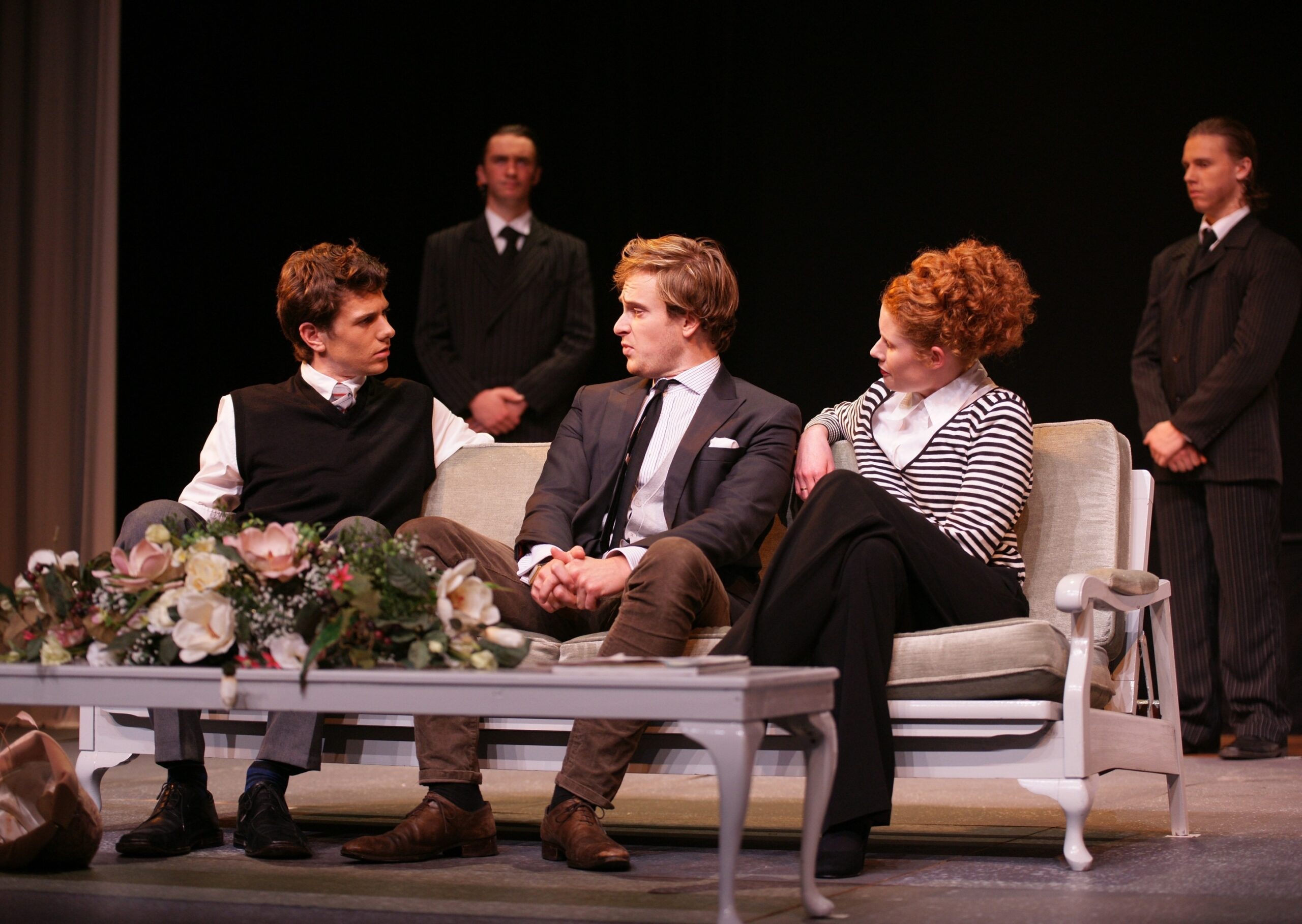
SONY DSC
Eddie in “Hamlet”, 2011
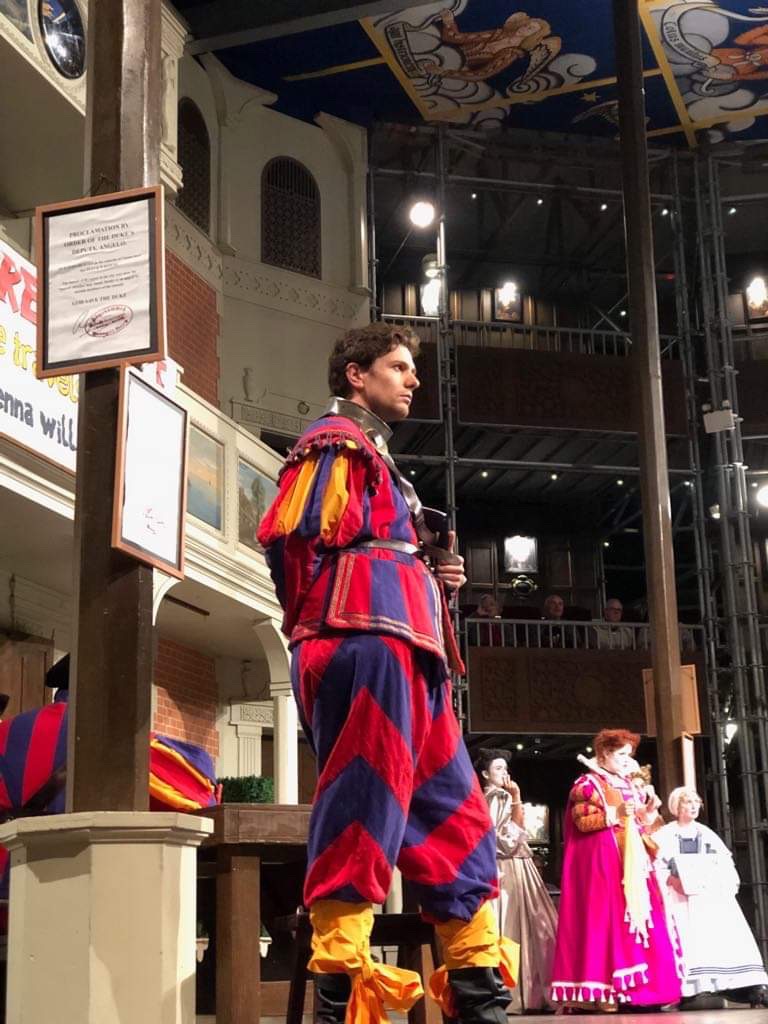
Eddie covering in Measure for Measure Popup Globe 2018 at short notice
Eddie covering in “Measure for Measure” Popup Globe 2018 at short notice

Tell me more about the art of acting? How do you think about it as an art? 

Eddie: I think that one of the giftings that I have as a director comes from having trained as an actor, and there are different “schools” of acting and ways of doing it. One approach is around whether the actor works from the outside and then into the emotional state—do they try and inhabit the outside body and then hope that the inner state will work? Or are we trying to embody it through the text, through the words, and trying to feel those emotions from the inside, which will then affect how we are through our bodies? Those are two different ways of doing it, I guess, and they’re different tools that you can use at different times.

But, it really, I think, comes back to relating to people and creating that sense of play between them. It’s like, when you say something to somebody, you feel something—you’re literally touched by the sound waves that go into your ear from another person and affect you. Actor training—I think it’s about being emotionally available to hearing something that somebody says, and then responding to it, to actually fully feeling that inside, and then responding. That, I think, is part of what creates that alive quality when you watch a performance and you see two or more actors on stage. Yeah, being alive, sharing with each other, and also hopefully sharing that with the audience. For me, working with actors really comes down to that relational aspect of how you’re actually making somebody feel.

Dr. Miles Gregory, the cofounder and first artistic director of Pop-up Globe, has described it [the Pop-up Globe theatre] in some academic work as an “empathy drum.” He’s talking about the structure of the actual building—the building is shaped like a drum in many ways—but also as an audience member witnessing a performance. When you’re onstage, the drum reverberates, right? The story that we’re telling then reverberates through everybody who’s participating in the event of theatre at that time. I think when you bring people together in an environment like that, the more people are making the music together, the more that the story sings, and the more it actually flows through everybody.

Ripeka: I think it really is about listening. There can be some very bad acting when people don’t listen. So, you’re listening, you’re sensing the other people—you’re listening to the audience, whom you may see or they may be in darkness, but you’re storytelling. I think the heart of it is actually sharing and connecting the story. You know, there was a big emphasis at drama school about the moments of the window to the soul and to do that through your eyes and your heart. There’s this one moment when you kind of break yourself open, storytelling, and you have to go there if it’s going to be anything. Whatever the story is, you have to strive for the most truthful, honest moment of connection. So, the theatre just cannot be the same every night. If someone’s just saying the lines by rote, it doesn’t work anymore. That’s what I’ve learned, and it’s what I’m taking into ministry and doing sermons is the moment of connection. I had to calm myself down yesterday [before preaching] because I just thought all you’ve got to do is get up there and tell the truth and share it with people. So, I try to look people in the eye when I’m telling the story.

Bianca in Taming of teh Shrew 2018:19
Ripeka as Bianca in “Taming of the Shrew” 2018/19

Can you tell me a bit about Shakespeare and why you love Shakespeare?

Ripeka: We go through the same body of emotions—it’s the same from mythology to Shakespeare to today. I mean, Shakespeare had lost his son—his son had died. So, he wrote Hamlet, which was borne out of the grief over his son, and there’s Twelfth Night too. These have deep theological themes of loss and grief, and reconciliation. In Twelfth Night, there’s also the question of “What’s a woman’s place?”, but Viola conceals herself, and she finds that, suddenly, as a man in society, she starts to be able to actually express herself, become her truest form. We see that a lot in the Shakespeare plays, that sort of commentary on the social side, which hasn’t much changed, actually.

Eddie: I think one of the first things I would say about that is if we think about society today, I think we could say that one of the myths and misconceptions out there is that we’re more advanced than people who came before us because of “progress,” right? We’re more developed; we know more about how our bodies work, how our brains function. That may be true that we have sort of a higher degree of scientific knowledge and understanding, but that’s not to say that people 400 years ago in Shakespeare’s day didn’t have their own way of understanding the world as well. The science isn’t as developed, but the emotional states that Shakespeare was talking about—what it is like to lose a child, what it is like to have elderly parents, people growing old, people growing up together, what it is like to love and to have lost—all of these things that are part of our human experience. They’re deeply embedded and ingrained in the text of his plays. I think also as a director, he’s also one of our best collaborators because he’s been dead for 400 years, and, if we change things a little bit, he’s not going to mind too much.


What’s your favourite Shakespeare play?

Eddie: The Winter’s Tale

Ripeka: Twelfth Night


I went to the Pop-up Globe several times and loved it, but little did I realise the drama that was going on backstage! Tell us how you met.

Eddie: So, when we met, I was the associate director of a production of Richard III [at the Pop-up Globe]. The company was also making The Taming of the Shrew. We’d auditioned Ripeka and offered her a part. The whole company met together on day one of rehearsals, and, on day two, we had a rehearsal scene with a few of us, and we were talking about our lives and so on, and hearing the bigger story. There was just something Ripeka said, and my eyes just snapped over to her and I saw her in a different way. I couldn’t stop looking at her after that. Yeah.

Ripeka: Well, I was Lady Anne in Richard III, and there’s a very big scene where I’ve got my dead father-in-law. So, his corpse, later that night it bleeds, it gushes blood, and we had been sent to rehearse it because it’s a challenging scene. We didn’t have the prop of the corpse at time, so Eddie had to be the corpse. I had to hold the corpse’s hand rehearsing the scene, and I just had this moment in rehearsal when I was holding his hand, and I realised I didn’t really want to let go. I knew then that something was up.

Backstage on Richard III Pop-up Globe - the show where we met
Backstage on Richard III Pop-up Globe – the show where we met

I think it’s a good sign if you can hold the hands of someone playing a corpse and just feel so much life, you know?

Ripeka: Yeah, we just hit it off. Everything’s sped up with the theatre because you’re spending nearly six days a week together; you’re spending all this time together, and you’re working on these big projects, and it really just becomes your life. You’re so passionate about the play, and that’s when I think we found that we can actually work together really well. We’re both so passionate about Shakespeare, and we just got on. We just wanted to hang out, didn’t we?

For many people in the arts, encountering Jesus changes both how they see the world and how they approach their art. What’s that been like for you as you’ve navigated life as artists and also as Christians?

Eddie: I think one of the things that definitely shapes the whole experience and process that I want to take people on as a director is that through the work, I want be a living witness to Jesus in the work that we do, and to make sure that for everybody in that experience, that all their mana is recognised, that they are uplifted, and that they find it a really positive experience. I’ve worked with some Christian theatre companies as well where prayer has been included in that process. We’ve also worked in secular environments where that hasn’t been so explicit, but we’re caring for people as we make that work and, really, nobody is left behind. I’ve also worked on productions where they have a really strong commercial basis—it’s quite transactional in some ways. But I think it’s about creating ensemble, doing everything that we can to create that ensemble—it’s about the heart and a living witness rather than about any sort of commercial transactional basis.

Ripeka: I never worked with a Christian theatre company. In London, it seemed like your faith and your art were very separate, and I didn’t think about it. Those worlds didn’t really meet for me. I had my own faith, but I didn’t shove it in people’s faces. I didn’t hide it either. But then I came to New Zealand and we ended every day with a karakia, and it was just such a natural integration—Indigenous integration, Christian integration. It was just a whole new world. It was like, “You can be that light,” and it’s totally fine—you don’t have to separate these things. I was really sort of annoyed when God asked me to be a minister because I thought, “Oh, I just want to be an actor. I don’t understand why you’re calling me to the ministry.” Now I get it because you don’t leave it behind—I’m not supposed to be separating the arts and ministry, I’m supposed to be doing it together.

Eddie: I think there’s this idea that people in a church context throw about, which goes, “Are you going to be bivocational?” I think I’ve struggled with the idea of being bivocational. Actually, my vocation encompasses both things. I am a whole person, and the whole of me is going to be thrown into both of those things in whatever way, shape, or form that takes. I mean, what are we doing in the Eucharist? What are we doing in church? It’s theatre, connection, and art—it’s got the comedic moments as well—and it’s wonderful. All the mistakes too.


So, what do you see as the place of the arts in the church? What dreams do you have for bringing your acting and directing backgrounds into church?

Ripeka: I think we and the congregation could all together put on a play, tell a story—whether it be a historical event in Aotearoa [New Zealand] or whether it be Shakespeare … perhaps we want to bring to life a particular story of Scripture. There’s just something wonderful that happens when you’re putting on the play. That would be the dream for me—maybe once a year we all put on this play, whether people are costuming, or selling tickets, or making the cups of tea, or doing the hair and makeup, or acting, or music …. That would be the dream for me—that we actually start telling these stories together.

Eddie: I would love to see some more gospel narratives in a highly dramatised way. I hate to say that theatre is like an evangelistic tool—it’s more about being a living witness to Jesus in the work that we make as artists—but I think that we’re able to explore so many emotions and the beauty of the human experience through play and drama, whatever that story is. I have a deep love of Shakespeare, and I have my suspicions that Shakespeare’s plays actually present a very strong gospel narrative. I would like to lean into that and see how far we can push a gospel narrative through Shakespeare’s plays.

Theadora's Baptism St John's Theological college both of us first year of B(Theol)
Theadora’s Baptism St John’s Theological College both of us first year of B(Theol)
Eddie and Theadora
Eddie and Theodora

How has your bicultural family, Māori and Pākehā, affected your approach to theatre, to Shakespeare perhaps, or the arts in general?

Ripeka: I think we bring all of ourselves to what we do. We’re aware that we are sort of symbolic. Within myself, I’ve got Māori and Pākehā heritage, so I am the coloniser and the colonised, and I just want to recognise that. I understand that a lot of people actually feel like they’re in this position. In the UK and in Germany, I felt this … There is no “Māori box” that you can tick; you’re “Ethnic Other” and you feel this weird sense of “Who am I?” We’ve got a beautiful daughter, and I want her to be proud of all her whakapapa and to feel reconciled with that, but that starts with all of us owning our narrative and history. The fighting parts of ourselves are the parts that people have said, “I can’t label you that” or “You don’t sound like that, you don’t look like that.” I hope we bring a sense of acceptance to other people just by owning who we are. It’s not just Māori and Pākehā anymore. We’re totally integrated as a whānau.

Eddie: For me, it was coming back to New Zealand after having lived abroad that I really started on this journey of noticing what an amazing sort of place New Zealand, Aotearoa, is and asking what my obligations and desires to be a good Treaty partner actually are. I’ve been on a journey through that. A production that we made as Pop-up Globe was A Midsummer Night’s Dream, which was very much an Aotearoa production. We had a translation done of the fairies into te reo Māori. So, about one third of the play was te reo Māori, and that really was an amazing experience of seeing how these characters fit in with the 1640s version, the English characters of Hermia and Lysander, and so on—seeing how those worlds collide and can actually be brought together in this way. We need to live together—we need to be reconciled—to share our unique and equal worth. That worth that we have comes from Jesus, it comes from God—we need to recognise that in everybody.

Ripeka: And it means something to see that. The first production I ever saw at Pop-up Globe was A Midsummer Night’s Dream. At the end, there’s this wonderful moment when you see the person who’s played Oberon, and Titania, and then they do a hongi with the lovers. It was just this moment of, “Oh gosh, that’s part of me and my culture, and these two worlds are meeting.” The representation means so much to me. I think that when you put yourself up there in ministry and you’re at the front, you have to understand that you are you, but you’re also representing something much bigger, and it means something. After I shared about the story of Parihaka the other day [at church], when we passed the peace, I went up to a gentleman and he gave me a hongi. I thought, “This is powerful stuff!” We can be part of this process of reconciliation and healing.

My absolute dream is to do a bilingual Twelfth Night, to have Viola and Sebastian coming from Aotearoa, precolonisation and going into maybe Jacobean England, and the meeting of worlds and mātauranga Māori. It would be quite an oppressive society, Jacobean England, and it would be about helping Olivia grieve and live again—that’s just what I want to do when we’ve got the time!


Any final thoughts?

Eddie: Go and watch more theatre!

Ripeka: You can bring all of your art to ministry. I do believe in the ministry of all believers, and I think we’ve all got a ministry and we’ve all got a calling. I would encourage everyone to bring as much creativity and humour to that as possible.


All images provided by Eddie Bijl & Ripeka Templeton Bijl

Arts Interviews
More from
Andrew Shamy +

Keep
Exploring

You may also
be interested in

David James Feature
Field Notes: David James
27 min read

All articles from
this edition

Sewing still Edition Feature
Common Ground
December 2023 Edtn

Also
on offer

Advent: A Weekly Devotional
Find out more

Common
Ground

December 2025 Edtn >>
Wait for the Lord

Sign up to receive Common Ground in your inbox

Sign Up
Shortcuts
  • Common Ground Editions
  • Residential Fellowship
  • Vocational Programme
  • Sign Up

Copyright © 2026
Venn Foundation

Venn Foundation

58 Hillsborough Road
Hillsborough, Auckland 1042

Email: mail@venn.org.nz

Phone: +64 (9) 929 4988

Post: PO Box 163138
Lynfield, Auckland 1443

Venn Foundation logo
Stay in the Loop

Receive all the latest information about Venn events, resources, programmes, and updates.

Sign Up
  • Instagram
  • Facebook
Support Us

Venn Foundation is a Charitable Trust (CC28328). If you would like to support our mission and work we would love to hear from you.

Donate Now

Design by Andy Campbell

Venn Foundation logo
  • Instagram
  • Facebook

Copyright © 2026
Venn Foundation

Design by Andy Campbell