Shortcuts
  • Common Ground
  • Summer Conference
  • Residential Fellowship
  • Vocational Programme
  • Sign Up
  • Instagram
  • Facebook
  • Lead Programmes
    • Summer Conference
    • Residential Fellowship
    • Vocational Programme
    • Evening School
  • Vocational Centres
    • Centre for the Arts
    • Centre for Business & Leadership
  • Courses & Events
    • Conversation Evenings
    • Short Courses
  • Resources
    • Store
    • Common Ground Magazine
    • Venn Presents
  • Who We Are
    • About
    • Our Story
    • Our People
  • Donate
  • Contact
Venn Foundation
58 Hillsborough Road
Hillsborough, Auckland 1042
Email: mail@venn.org.nz Phone: +6499294988
PO Box 163138
Lynfield, Auckland 1443
Photos by Charlotte Ennor
  • Link copied!

Dance, and the Ageing Body’s Gift

By Rachel Kitchens >> 10 min read
Arts Arts, Photography, Music Photography

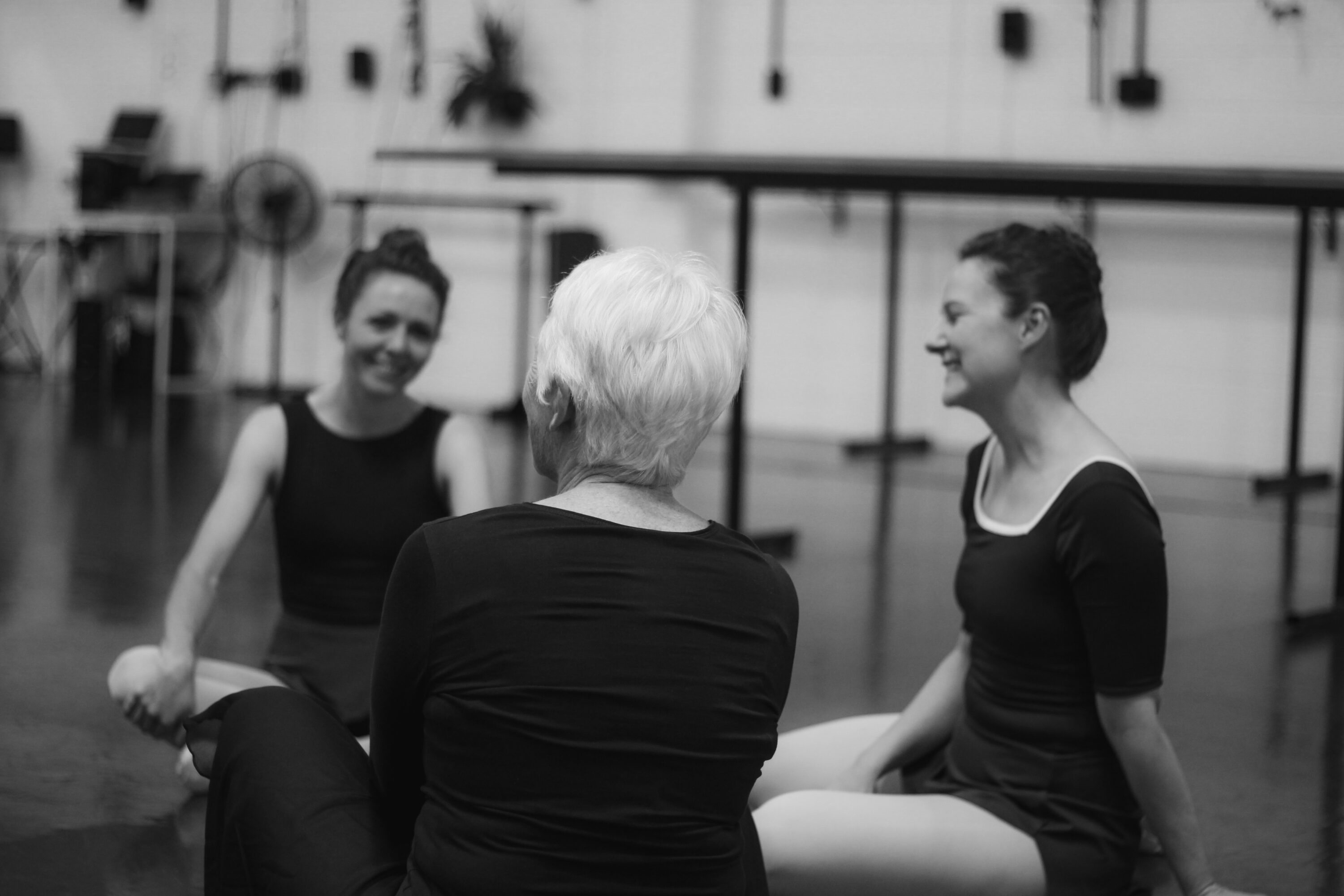
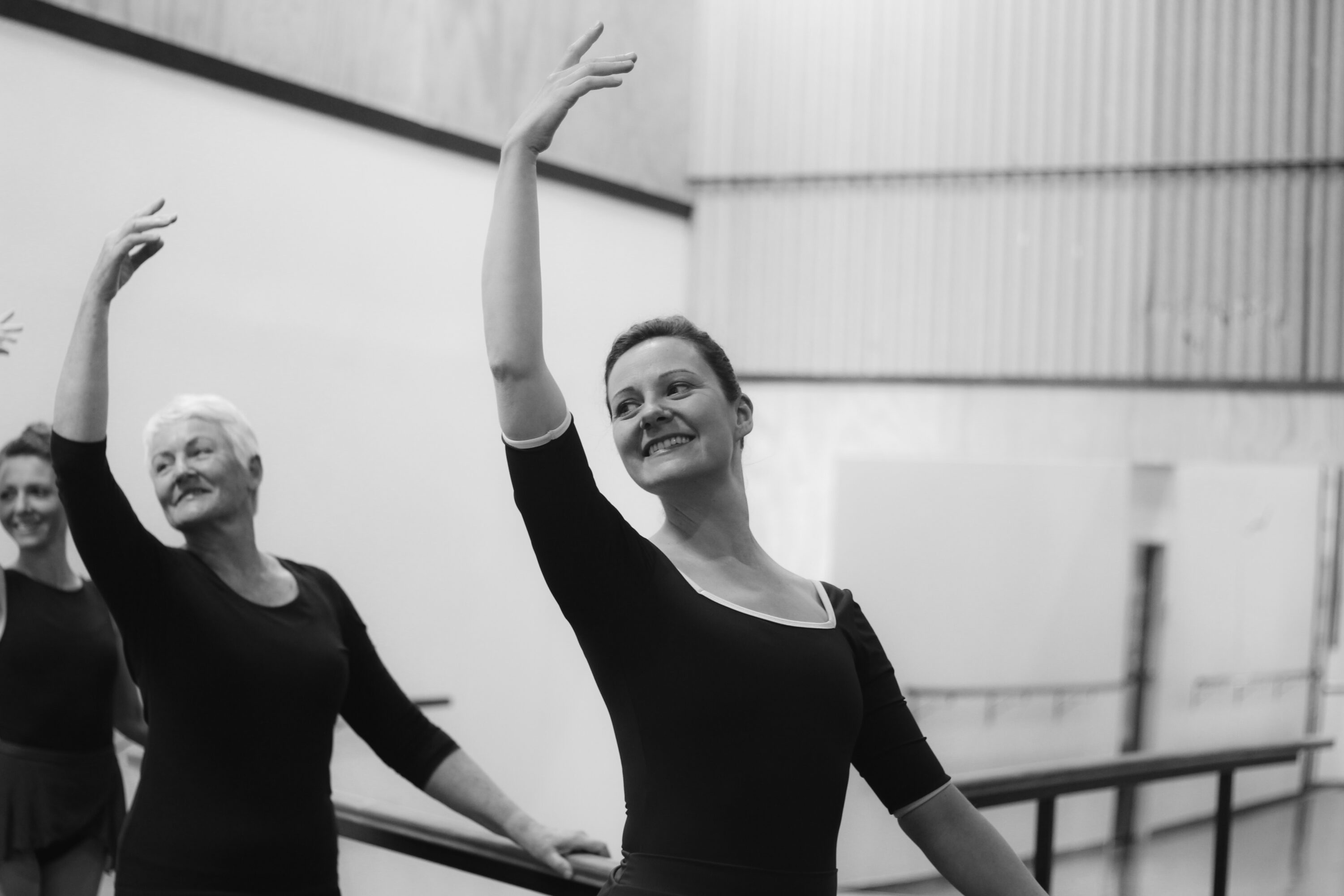
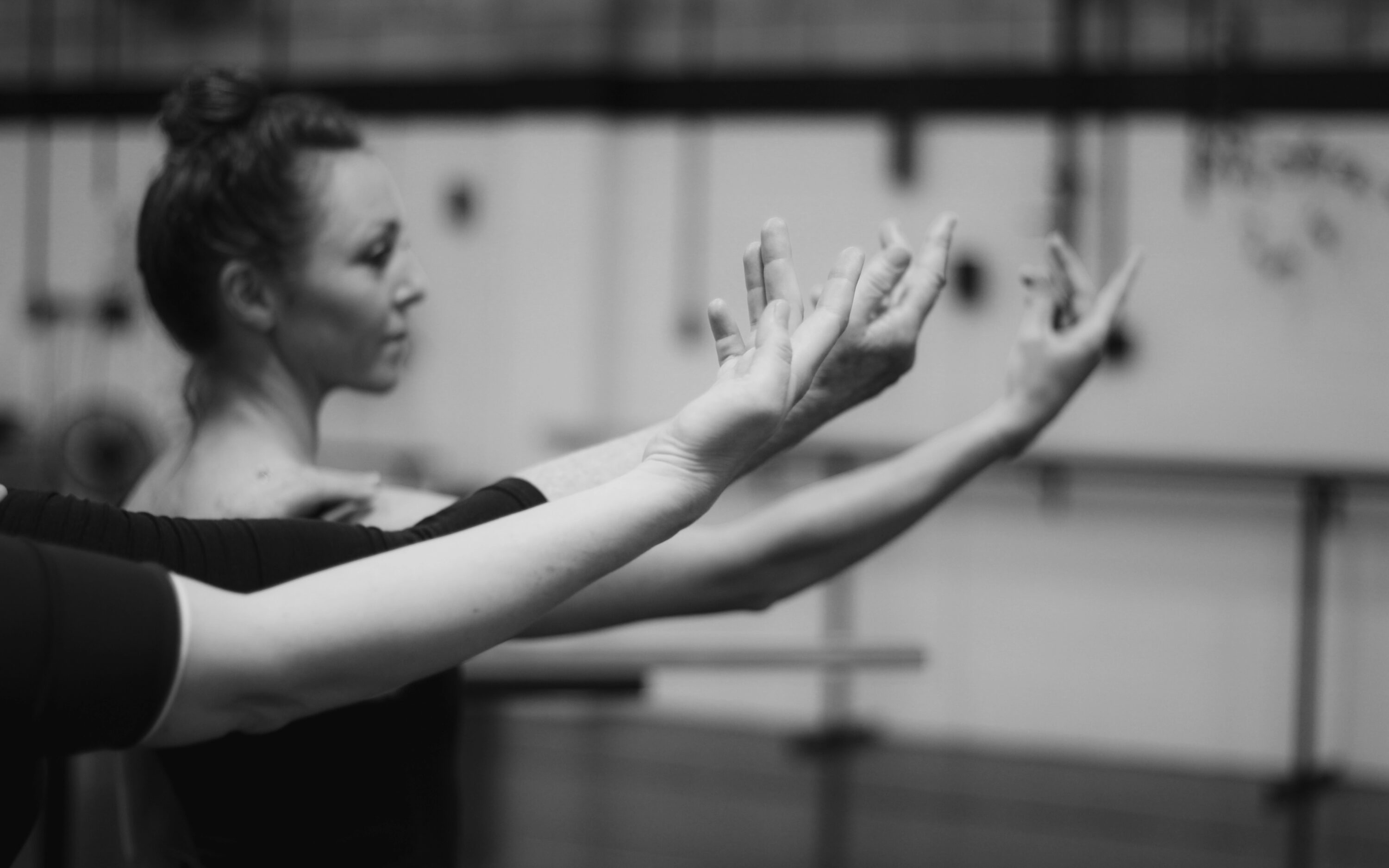
This essay is accompanied by photographs by Charlotte Ennor. For these images, Rachel gathered with other dancers at the studio where she teaches. The result is a photo essay that captures the grace of bodies in motion at different ages and stages of life – Ed.


I’m sure my love of movement started in my grandmother’s living room, age five. I recall listening to her favourite tunes from the 40s.

“Big Band,” she called it—Benny Goodman and Louis Armstrong. Those full orchestral sounds would waft through the open house, aired out after a summer thunderstorm. I wanted to make my body feel the way the music sounded, moving in, around, and through it. I wanted to move with it in an intimate space that was intuitive and full, without the need for words. The hydrangeas and azaleas would bloom thick in the Atlanta heat. She and I would dance together, both happiest when we were moving.

In my early years, dancing was about escaping pain. I didn’t have to talk about my feelings, I could dance them or, at least, dance through them by following a certain number of specific steps. My mind and body became trained to move through the movement and to leave heavy things behind. I became lighter, steadier, stronger. After knowing the steps of choreography, next came the artistic expression with its physical prowess—the ability to dance with joy, fully myself, the way a painter paints a particular tree, or the way a violist plays a piece of music: fully themselves, participating in a piece of art, adding expression and nuance. And then, in time, there was surrendering to the unique feeling of “something bigger” than myself.

Often, dance has felt to me like falling through quicksand—the pull, the push, the heaviness, and the surrendering of it. I have been transformed through dance—in a studio, on the stage, on the beach, in my car, even in my own living room. Many times, this has felt like a Holy Spirit encounter. I remember one particularly hot summer in Mississippi at a strenuous ballet camp with near 100% humidity and no air conditioning. I watched with awe as the instructors finished up their teaching and lay down on the stone-cold floor of the studio, face upwards. Total quiet. Total surrender. Eyes closed, palms open. Bodies tired, tender, and supple. A moment of sacred time. Something opened up inside me, and it started to bloom. I could feel it curling, encircling, and breaking me open. I wanted to be like that: everything danced out, everything tender, strong, gentle, fleeting, weighty, slippery, a rush in and out. I wanted to be that in tune with my body. I wanted God to fill my inner self so that dance became me with God, in and through: intimate, unique, and deliciously private, a closeness with God that is the truest sense of the self. I didn’t understand it, but it was very real for me. I wanted to have that.

IMG_9696

Through my angsty 20s, into my identity-forming 30s, I felt the strength of my body growing. I was dancing four to six hours every day, and I felt invincible. I was dancing with people who would shift the world of dance globally and who were incredible performers; many of them have gone on to have careers in dance and have travelled the world. I was a hair’s breadth from that, but I did not choose it. I felt frightened by the prospect of total immersion into a craft that could become my whole life; I wanted to be a whole person. While I craved belonging in the dance world, I knew it would continue to want more, ask more, and become a greedy taskmaster. My body, mind, and spirit would be expected to be surrendered on the altar of dance, and it felt like a hard choice. I wanted to surrender my whole life to the God whom I intuitively understood would care for me more truly and beautifully than the fickle gods of the stage, and physical perfection and self-expression. And still, there were “micromoments” in dance of being aware of the Holy Spirit—in Virginia, in North Carolina, at the prestigious American Dance Festival, and in Harlem, NYC.

I commenced a master’s degree in theology, and I began to wonder more deeply about dance and theology. Could they go together? What does the Christian faith believe about the body? What does God want me to know about my body in all its creaturely forms? And then, I found Pope John Paul II’s Theology of the Body, and it was a breath of fresh air: “This is the body—a witness to creation as a fundamental gift, and therefore a witness to love as the source from which this same giving springs.” Or, as Emily Stimpson Chapman puts it in her book These Beautiful Bones, “Matter is never just matter. It is always in some way, a gift. And it also in some way points beyond itself to the one that created it.” Studying John Paul II’s Theology of the Body, I realised that the way humans view the body matters. It matters to God. The body is not just a place where we can mould, shape, or control. The body is for loving, for giving, for treasuring, for remembering. The body is not just for fun, or sex, or TikTok videos. The body has meaning.

God honours the body by sending Jesus in the form of a body, a human man. The incarnation is a total and absolute affirmation of the body: the God–man, who swims, eats, and laughs with his friends, who writes in sand to make a point, who uses mud and spit to change eyesight, who has kneecaps, and elbows, and eyelashes. He ages, growing from a baby to a boy, a teenager, and then a man. God the Son enters into time … and then dies, and—as a body—is resurrected back to life. God cares so much about the matter and “stuff” of creation that he sends his Son to be for us a real human. This redeems the very matter that I think is broken or weak or unimportant or, at the worst, a distraction that needs to be upended and ignored. How God views us—creatures made from dust and the breath of life—changes everything. It should really change how I view myself. Instead of being fascinated with the beauty of youth or with firmer skin, I need to let God’s deep compassion for my body soak into my bones. I must surrender my body to God’s loving gaze at every stage of life. As I allow the Holy Spirit to come near my body in all its imperfect and feeble ways, I see my body as it truly is. Scars and all, I come nearer to the God of love. God honours what God has made in me, and I get to partner with God in a collaborative endeavour by welcoming the life that I have in my body now, not when I lose more kilos, or when I’m less tired, or when I have less wrinkles. God, it turns out, is a God of the body.
How God views us—creatures made from dust and the breath of life—changes everything. It should really change how I view myself.

IMG_9774

I took seven years off from dancing—a nice biblical number. I had my three kids. Around age 40, I returned to dance at a local ballet studio. Little by little, my body remembered how to plie, how to pirouette—the gift of body memory. But I wasn’t exactly dance ready. I did not feel “euphoric” as I had hoped. I delighted in this return to the studio and to dance, but I also noticed the ageing process—the lack of flexibility and strength. My body had scars—I’d had three C-sections. My shape was different. My muscles felt weak. I’d had multiple back spasms (too many to count!) when I’d been in bed for days on end. Gone were the days when I didn’t “feel tired” after dance class or felt totally exhilarated by the exhaustion of what my body could do.

These days, my spiritual director keeps asking me what the gift is of an ageing dancer’s body. I look at her and say, “There is no gift. I don’t want that gift. I want the gift of youth. I want to dance like time isn’t running out.” I moan and cry that it’s unfair that my body is not as fit as I want it to be, that the art medium I’ve chosen means that I’m working with an unreliable resource that is degrading over time. My instrument is prone to the patterns of disease and decay. Sometimes, when I’m feeling particularly low, I will look at ballet performances of dance companies around the world—both in awe and in jealousy, a love–hate look at the ballet dancers whom I aspire to. In my heart I know that I will never get there. When I’m flat on my back and in pain after another “bad back experience,” I think to myself that my body has failed me or even revolted against me.

But God does not look at me this way. God is the God of an upside-down kingdom. God makes the strong weak and the weak strong. What would it be for me to accept the body just like God did? How would it be for me to accept my body as it already is right now?

Well, it’s hard. But it’s why I teach the Senior Swans, a group of dancers over the age of 55. I feel a sort of tenderness for these older dancers, the kind one might feel for a wonderful grandmother. I often cry when I see them perform in our annual dance shows. There’s an acceptance of age, graceful and tender—a sweet surrender that shows itself in a delightful childlikeness. They have an ability to laugh at themselves, to cherish their efforts of doing something new today—and they laugh because of the pure joy of it. The uncertainty of steps, the soft skin—they beckon me. Here is the audacity of hope: the body straining towards the something that can’t quite be caught, only brushed against—the beauty of resurrection. And if I enter in, I find God sees me as I see these lovely women—the body redeemed, sacred, held, cherished, and adored.

IMG_0156
IMG_0013

We are bodies formed by the dust of the earth and given the breath of life. My body isn’t meant to be a product to be controlled, honed, sculpted, or shaped. It’s meant to be given and gifted. I can step away from the bathroom scale, the mirror, the Instagram post, the ideal, the “trick” of a better and more amazing feat of dance brilliance—I can step away from the images that seduce me to say I should look and feel like that. I can enjoy what my body can do by not being a slave driver to the expectation of the perfect. Yes, my body is prone to decay. Yes, I will die. But I will also be resurrected. This body will know life again. God says yes: yes to finding life in the midst of death and dying. I can say yes to God’s invitation now and let go. And what might happen if I invite the divine Spirit to be with me—in and through me—once again, afresh each day, in the ordinary extraordinary moments of this body, which is a sign of both decay and resurrection?

I put my tired feet in some dirty pink ballet slippers, step into the studio, and go again.

IMG_0170
IMG_9758
IMG_9770
Arts Arts, Photography, Music Photography
More from
Rachel Kitchens +

Keep
Exploring

You may also
be interested in

Gabs Peake_feature
Field Notes: Gabrielle Peake
18 min read

All articles from
this edition

Sewing still Edition Feature
Common Ground
December 2023 Edtn

Also
on offer

Look at the Birds of the Air
Find out more

Common
Ground

December 2025 Edtn >>
Wait for the Lord

Sign up to receive Common Ground in your inbox

Sign Up
Shortcuts
  • Common Ground Editions
  • Residential Fellowship
  • Vocational Programme
  • Sign Up

Copyright © 2026
Venn Foundation

Venn Foundation

58 Hillsborough Road
Hillsborough, Auckland 1042

Email: mail@venn.org.nz

Phone: +64 (9) 929 4988

Post: PO Box 163138
Lynfield, Auckland 1443

Venn Foundation logo
Stay in the Loop

Receive all the latest information about Venn events, resources, programmes, and updates.

Sign Up
  • Instagram
  • Facebook
Support Us

Venn Foundation is a Charitable Trust (CC28328). If you would like to support our mission and work we would love to hear from you.

Donate Now

Design by Andy Campbell

Venn Foundation logo
  • Instagram
  • Facebook

Copyright © 2026
Venn Foundation

Design by Andy Campbell